
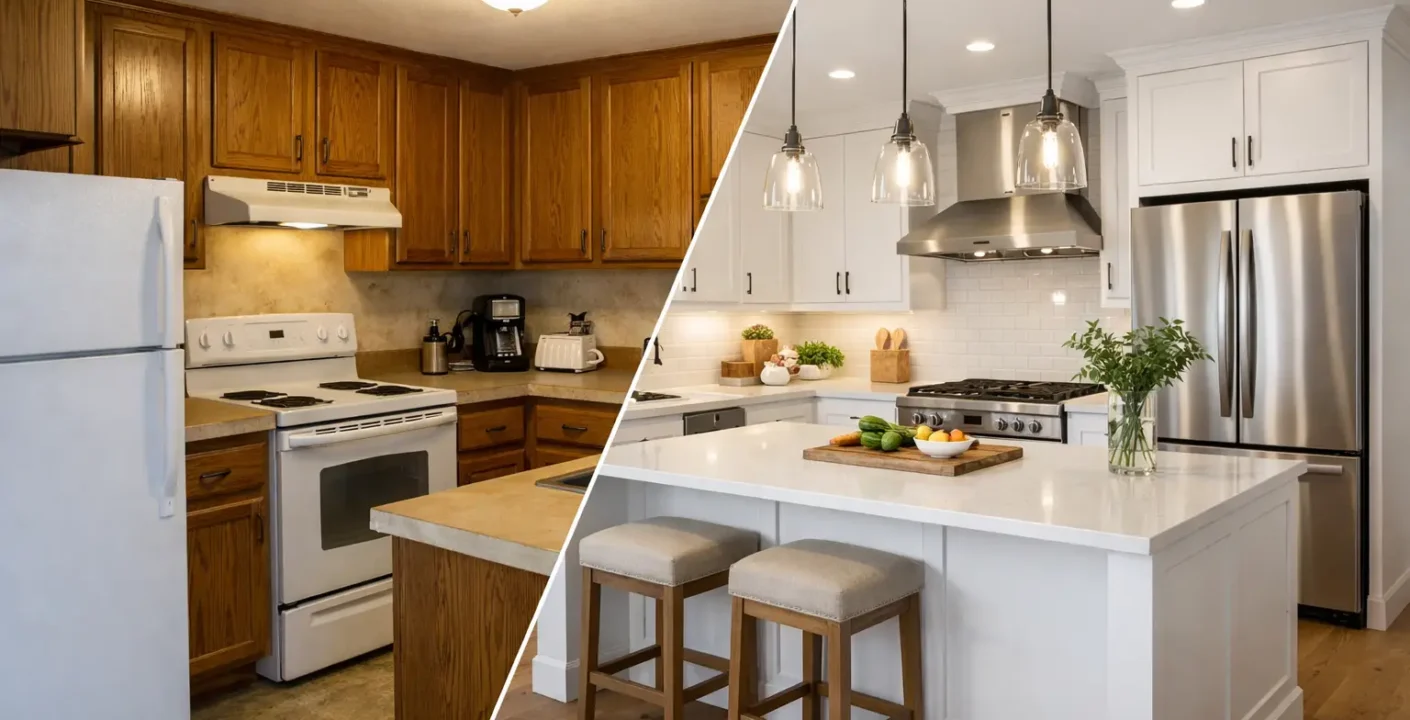
A true kitchen remodel before and after is not just about prettier cabinets or new counters. The biggest difference is usually how the room works when real life happens – weekday breakfasts, grocery unloading, homework at the island, and cleanup after everyone is done. For many North Texas homeowners, the best remodels fix daily frustrations first and style second.
That is why before-and-after results can look dramatic even when the footprint stays the same. A kitchen that once felt dark, cramped, and hard to maintain can become brighter, easier to organize, and far more comfortable without moving every wall. The smartest projects focus on what was not working and build from there.
What a kitchen remodel before and after really shows
Homeowners often notice the visual change first. Old oak cabinets may be replaced with a cleaner painted or stained finish. Laminate countertops may give way to quartz or granite. Outdated tile backsplashes, worn flooring, and bulky light fixtures are replaced with materials that feel current and easier to live with.
But the real story is in the details behind the photos. Before the remodel, a kitchen may have poor traffic flow, limited prep space, weak lighting, and storage that wastes every upper corner. After the remodel, those same square feet can feel bigger simply because the layout makes more sense.
A good before-and-after transformation also reflects better decision-making, not just bigger spending. Some homes benefit from a full reconfiguration with new cabinetry and appliance locations. Others get the best return by improving finishes, lighting, and storage while keeping plumbing and electrical in roughly the same place. It depends on the age of the home, the condition of the existing kitchen, and how long the owner plans to stay.
The biggest changes homeowners notice after remodeling
Layout that supports daily use
One of the most common issues in older kitchens is a layout built for a different era. Appliances may crowd each other, islands may be undersized or missing entirely, and the room may force people to cross paths constantly. After remodeling, homeowners usually notice that everyday tasks require less effort.
That can mean widening walkways, improving the distance between sink, range, and refrigerator, or adding an island that creates prep space and casual seating. In some kitchens, removing a wall is worth the investment because it improves sightlines and allows the room to connect better with dining and living areas. In others, keeping the existing footprint is the smarter move if the structure, budget, or timeline makes a full rework less practical.
Storage that actually solves clutter
A kitchen can look large and still feel short on storage. Before remodeling, many homeowners are working around deep base cabinets with dead space, overcrowded drawers, and upper cabinets that are difficult to reach. The after side of the project often includes much more useful storage, even if the cabinet count stays similar.
Deep drawers for pots and pans, pull-out trash storage, tray dividers, spice storage, and pantry improvements make a real difference. Custom or semi-custom cabinetry can help maximize awkward corners and appliance walls. This is one reason the after photos feel calmer – there is a place for everything that used to sit out on the counter.
Lighting that changes the whole room
Lighting is one of the most overlooked problems in older kitchens. A single ceiling fixture or dim recessed lights can make the room feel smaller, duller, and harder to work in. After remodeling, the kitchen often feels more expensive simply because the lighting plan is better.
Layered lighting usually works best. Recessed ceiling lights cover the general space, under-cabinet lighting improves prep work, and pendants over an island add both function and style. Natural light matters too. If the remodel includes opening walls or improving window placement, the before-and-after impact can be substantial.
Materials matter, but so does maintenance
A lot of kitchen transformations are driven by finish upgrades, and for good reason. Cabinets, counters, backsplash tile, flooring, and fixtures shape the look of the room more than almost anything else. Still, the best selections balance appearance with durability.
Quartz remains popular because it offers a clean look and low maintenance. Natural stone has strong visual appeal but may require more care. Painted cabinets can brighten a kitchen dramatically, but homeowners with young children or heavy daily use may want to discuss finish durability and touch-up expectations. Flooring also deserves careful thought, especially in busy homes where water resistance and easy cleaning matter as much as style.
The before-and-after contrast is strongest when the materials fit the way the household actually lives. A beautiful kitchen that shows every fingerprint or scratches too easily can lose its appeal fast.
When a small kitchen remodel creates a big before-and-after impact
Not every impressive transformation comes from a large kitchen. In fact, smaller kitchens often show some of the most satisfying before-and-after results because every improvement is felt immediately.
In a compact kitchen, replacing bulky cabinetry with better-planned storage can free up usable space. Lighter finishes can make the room feel more open. A better appliance layout can remove bottlenecks. Even changes like extending countertops, adding a microwave drawer, or shifting the sink location slightly can improve how the room functions.
The key is restraint. In smaller kitchens, too many design features can crowd the space. Clean lines, practical storage, and a consistent material palette usually create the best result.
Budget choices that make the most visible difference
Homeowners often ask what changes show up most clearly in a kitchen remodel before and after without pushing the project beyond budget. The answer depends on the starting point, but certain updates tend to deliver strong impact.
Cabinet replacement or refinishing usually leads the list because cabinets cover so much visual area. Countertops and backsplash come next, followed by lighting and flooring. Hardware, paint, and plumbing fixtures may seem minor by comparison, but they help tie the room together and make the finished kitchen feel intentional rather than pieced together.
If the budget is limited, it may be smarter to invest in fewer high-impact upgrades instead of spreading money too thin. For example, keeping the existing layout while upgrading cabinets, counters, lighting, and flooring can often produce a better overall result than attempting structural changes without enough budget to finish the details well.
Why planning makes the after photos possible
The strongest remodels do not happen by accident. What looks effortless in the after image is usually the result of careful planning before demolition starts. That includes measuring accurately, understanding how the household uses the kitchen, selecting materials early, and identifying any hidden issues in the existing space.
Older homes in the Dallas-Fort Worth area may bring surprises such as outdated wiring, uneven floors, plumbing limitations, or previous work that needs correction. These issues are not always visible in the before photo, but they can affect cost and timeline. A dependable contractor will talk through those possibilities early so homeowners can make informed decisions rather than reacting under pressure later.
This is also where communication matters. Remodeling is easier when the homeowner understands what is changing, what stays the same, and where trade-offs exist. For example, a custom cabinet layout may improve storage but take longer than stock options. A wall removal may create a beautiful open kitchen but add structural complexity. The right choice is not always the biggest one. It is the one that fits the home, the budget, and the goal of the project.
How before-and-after improvements affect home value
A remodeled kitchen can make a home more attractive to future buyers, but resale value should be viewed realistically. Not every dollar spent returns dollar for dollar, and highly personal design choices can narrow buyer appeal. Still, kitchens remain one of the most influential spaces when people evaluate a home.
What tends to support value best is a kitchen that feels updated, functional, and appropriate for the neighborhood. Buyers notice quality cabinets, durable counters, good lighting, and a layout that feels easy to live with. They also notice poor workmanship, awkward design decisions, and finishes that already look dated.
For homeowners planning to stay for years, the value equation is broader. A kitchen that works better every day has practical value even before resale enters the picture. That is often the strongest reason to remodel.
Choosing the right approach for your home
No two before-and-after kitchen remodels should look exactly alike because no two households use their kitchens in exactly the same way. A family that cooks nightly has different priorities than a homeowner preparing a property for sale. A larger home may need a statement island and custom storage, while another may benefit more from modest improvements done with care.
That is why experienced planning matters. A contractor with a strong local track record can help homeowners sort through what is worth changing now, what can wait, and how to avoid spending money in the wrong places. Companies like Oak Custom Remodeling often see the same pattern: homeowners start by wanting an updated look, then realize the bigger payoff comes from improving function, comfort, and long-term value at the same time.
The best kitchen transformation is not the one with the flashiest finishes. It is the one where the after version finally feels like it fits your home and the way you live in it.