
A bathroom can look freshly remodeled on day one and feel dated only a few years later if the fixtures were chosen for a passing look rather than daily use. The most useful bathroom fixture trends for North Texas homeowners are not about copying a showroom display. They are about creating a room that is comfortable, easier to maintain, efficient with water, and appropriate for the home’s style and value.
For a bathroom remodel in Sachse, Dallas, Fort Worth, or the surrounding area, fixture decisions deserve more attention than they often receive. Faucets, shower systems, toilets, sinks, and lighting affect how the room functions every morning and evening. They also influence the budget, plumbing scope, and long-term maintenance needs.
Bathroom Fixture Trends That Balance Style and Use
Warm finishes are replacing all-chrome rooms
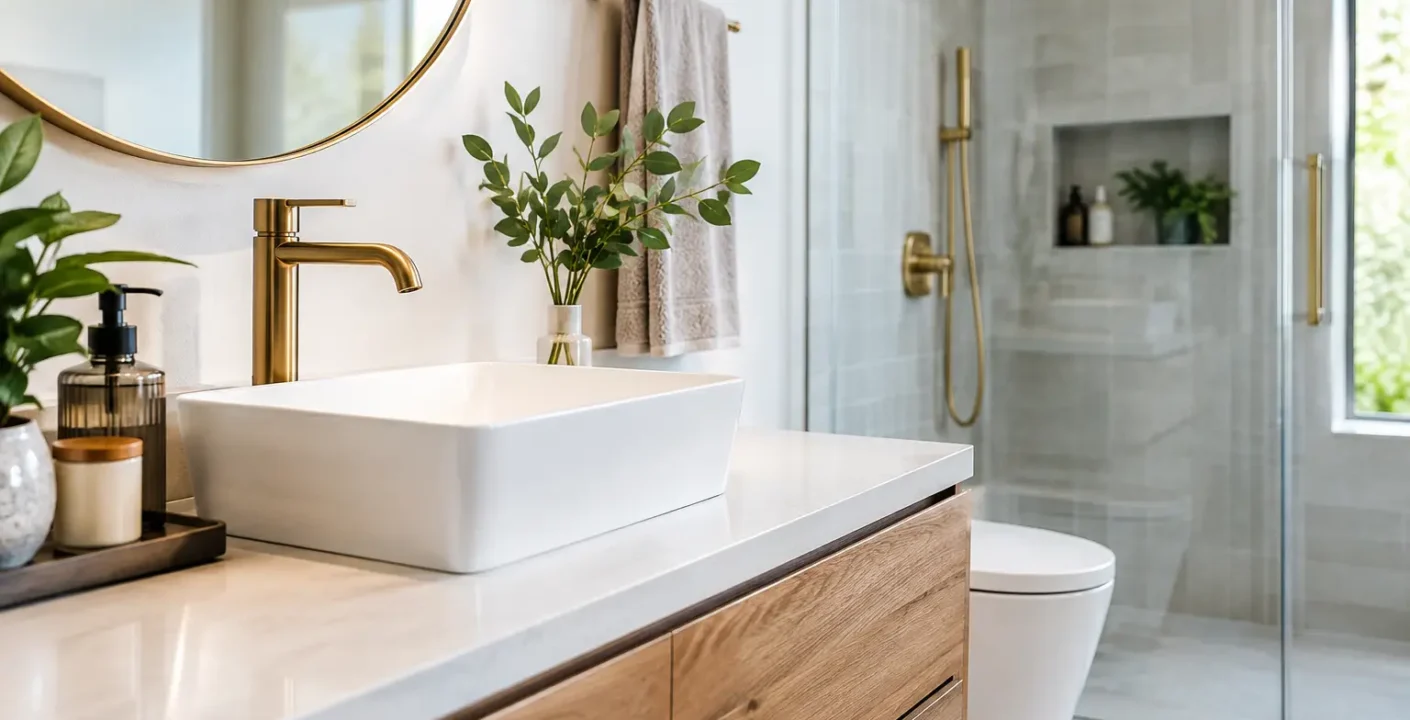
Chrome remains a reliable choice because it is widely available, easy to coordinate, and usually budget-friendly. Still, many homeowners are moving toward warmer fixture finishes that make a bathroom feel less clinical. Brushed nickel continues to be a safe, versatile option, while brushed gold, champagne bronze, and soft brass add warmth without looking overly formal.
Matte black is still popular, especially in contemporary bathrooms with white tile, natural wood cabinetry, or black-framed shower glass. It creates contrast and gives a simple room a more defined look. The trade-off is maintenance. Water spots, soap residue, and scratches can be more noticeable on dark finishes, particularly in busy family bathrooms.
A mixed-metal approach can work well when it is intentional. For example, a homeowner may use brushed nickel plumbing fixtures with black vanity hardware and mirror frames. The key is limiting the palette instead of introducing a different finish at every location. Two coordinated finishes usually feel considered; four can make the room look pieced together.
Larger shower systems focus on everyday comfort
Homeowners are putting more of the bathroom budget into showers, particularly in primary suites. A larger showerhead, a handheld shower wand, and a thermostatic or pressure-balancing valve can turn a basic shower into a more useful daily space. Handheld fixtures are especially practical for rinsing the shower, bathing children or pets, and supporting aging-in-place plans.
Rain showerheads remain popular, but they are not always the best standalone choice. Their wide spray can feel relaxing, yet some models provide less pressure than homeowners expect. In a home where water pressure is already limited, pairing a rain head with a standard wall-mounted showerhead or handheld unit provides a better result.
Linear drains and curbless shower entries are also appearing more often in higher-end bathroom remodels. They can create a clean, open appearance and reduce a step at the shower entrance. However, these features require careful planning for floor slope, waterproofing, and drainage. They are not a cosmetic upgrade to add late in the project.
Freestanding tubs are becoming more selective
Freestanding tubs remain a strong visual feature in larger primary bathrooms. Their open profile can make a remodeled space feel more custom, especially near a large window or beneath a statement light fixture. They work best when there is enough room to walk around them comfortably and enough space to clean behind and beside them.
In a tighter bathroom, a freestanding tub may take up valuable square footage without improving how the room is used. Many homeowners are choosing a generous walk-in shower instead, particularly when the existing tub is rarely used. This is one area where resale considerations depend on the home. A family-oriented house may benefit from keeping at least one bathtub, even if the primary bathroom shifts toward a shower-first layout.
Wall-mounted vanities and faucets create visual space
Floating vanities are a popular way to make a bathroom feel lighter and more open. By exposing the floor beneath the cabinet, they can give a small hall bath or powder room a less crowded appearance. They also make floor cleaning easier.
Wall-mounted faucets support the same clean-lined look and free up space on the countertop. They can be especially helpful with vessel sinks or narrower vanity tops. However, wall-mounted plumbing must be planned before walls are closed. Repairs may also be more involved than they are with a standard deck-mounted faucet, so quality valves and professional installation matter.
For homeowners who prefer a more traditional or transitional bathroom, a furniture-style vanity with a well-made widespread faucet remains an excellent choice. Trends should help guide a design, not force a home into a style that does not fit the rest of the property.
Water-Saving Fixtures Are a Practical Upgrade
Water efficiency is no longer limited to weak shower sprays and toilets that need a second flush. Current WaterSense-rated toilets, showerheads, and faucets are designed to reduce water use while maintaining good performance. For homeowners who expect to stay in their homes for years, those savings can add up over time.
Comfort-height toilets are also widely requested. Their slightly taller seat height can feel more comfortable for many adults and can be easier to use for people with mobility concerns. Elongated bowls offer additional comfort, although they require more clearance in a compact bathroom. Before selecting one, measure the available space and account for door swing, vanity depth, and the pathway through the room.
Smart toilets and bidet seats have become more common as well. Features such as heated seats, night lights, adjustable wash settings, and hands-free flushing appeal to homeowners who want added comfort. These fixtures require access to electricity, and advanced models can raise both the purchase price and future repair costs. A bidet seat can offer many of the same benefits at a more moderate cost.
Better Lighting Is Part of Fixture Planning
Lighting is often treated as a finishing detail, but it has a direct effect on how a bathroom functions. A single ceiling fixture may brighten the room generally while still leaving shadows at the vanity. Layered lighting produces a more useful result: overhead illumination for the room, lighting at the mirror for grooming, and accent lighting where it adds safety or atmosphere.
Backlit mirrors are a growing favorite because they provide a clean appearance and a soft glow. Some include defogging features, which can be helpful in a shared bathroom. Even so, a backlit mirror should not always be the only source of task lighting. Sconces placed at face level on both sides of the mirror often provide more even light for shaving, makeup, and skin care.
Choose LED fixtures with a color temperature that feels natural rather than harsh. Many homeowners prefer a warm-to-neutral white light in the 3000K range. The right choice depends on the room’s paint color, tile, and amount of natural light.
Choose Fixtures for the Home You Have
The strongest bathroom fixture trends are the ones that solve real problems. A brushed brass faucet may look right in a renovated historic-style home, while matte black may complement a newer contemporary property. A curbless shower can improve accessibility, but it needs the correct structural and waterproofing plan. A freestanding tub can add appeal, but only when the room has space to support it.
It also pays to consider replacement parts and finish availability. A less expensive fixture may cost more in frustration if cartridges, handles, or matching accessories are difficult to find later. Established brands with dependable warranties are often the better value, even when their initial price is higher.
Before finalizing selections, look at the fixtures together with the vanity, tile, mirrors, and lighting. Samples and showroom displays help, but a contractor can also identify plumbing conflicts, clearance concerns, and installation requirements before they become change orders during construction.
A well-planned bathroom should feel current without demanding constant attention or becoming dated after one design cycle. Oak Custom Remodeling helps North Texas homeowners weigh those practical details so the finished space is built for the way they live, not just for the first impression.