
A countertop has to do more than look good in a showroom. It needs to handle weeknight dinners, school projects, hot serving dishes, spills, and the daily wear that comes with a busy North Texas home. When homeowners compare quartz versus granite countertops, the best choice usually comes down to how they live, how much maintenance they want, and the look they want their kitchen to have for years to come.
Both materials can add real appeal and value to a kitchen remodel. Neither is automatically right for every home. Understanding the practical differences before selecting a slab helps prevent an expensive decision from becoming a frustrating one.
Quartz Versus Granite Countertops: The Main Difference
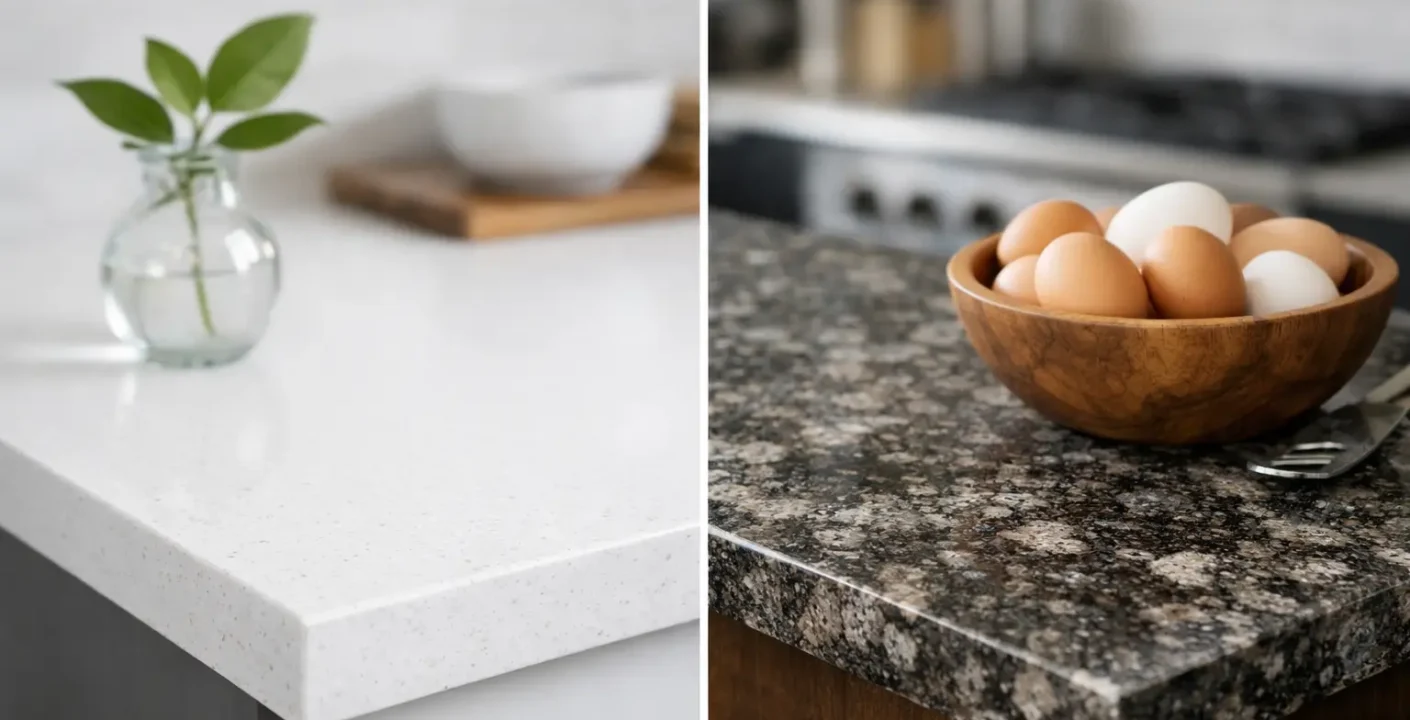
Granite is a natural stone cut from the earth. Every slab has its own pattern, color shifts, mineral deposits, and veining. That variation is a major reason many homeowners choose it. A granite countertop can make a kitchen feel distinctive because no other slab will look exactly the same.
Quartz countertops are engineered surfaces. They are made primarily from natural quartz particles combined with resins and pigments, then formed into durable slabs. Because the material is manufactured, quartz offers more predictable color, pattern, and finish options. It can resemble marble, concrete, natural stone, or provide a clean, consistent solid color.
This distinction affects nearly every other part of the decision, including maintenance, heat resistance, appearance, and installation planning.
Appearance: Natural Character or Consistent Design?
Granite is often the better fit for homeowners who want movement, depth, and one-of-a-kind character. Some slabs have subtle speckling, while others feature dramatic veining or rich color variation. Since the slab is natural, it is important to view and approve the actual material rather than relying only on a small sample.
Quartz is a strong choice when a kitchen design calls for consistency. It works especially well in modern, transitional, and bright painted-cabinet kitchens where homeowners want a controlled look. Marble-look quartz remains popular because it provides soft veining without requiring the same level of care as natural marble.
There is no universal winner on appearance. Granite can be the focal point of the room, while quartz can create a quieter, more uniform backdrop for cabinetry, tile, flooring, and lighting. The right answer depends on whether you prefer natural variation or a more curated finish.
Durability for Everyday Kitchens
Both granite and quartz are durable materials, but they handle certain conditions differently.
Quartz is nonporous, which means common kitchen spills are less likely to soak into the surface. Coffee, cooking oil, juice, and other everyday messes can typically be cleaned with mild soap, water, and a soft cloth. It is also highly resistant to scratching under normal kitchen use, although cutting directly on any countertop is not recommended.
Granite is also hard and stands up well to daily activity. It is generally more heat resistant than quartz, making it more forgiving if a hot pan is briefly placed on the surface. However, granite is porous to some degree. A properly sealed granite countertop resists staining well, but its protection depends on the quality and condition of the sealer.
Quartz has one important limitation: high heat can damage the resin that binds the material together. A hot skillet, baking sheet, slow cooker insert, or electric griddle should never be placed directly on quartz. Trivets are a simple habit, but they are necessary for protecting the surface.
Maintenance: How Much Upkeep Do You Want?
For homeowners who want the lowest-maintenance option, quartz usually has the advantage. It does not need routine sealing. Regular cleaning with a gentle household cleaner or soap and water is generally enough. Avoid harsh chemicals, abrasive pads, and strong solvents that can dull the finish or affect the resin.
Granite requires more attention, though it is not difficult to live with. Most granite countertops need periodic sealing, often every one to several years depending on the stone, finish, sealer, and amount of use. A simple water test can help indicate when resealing may be needed: if water darkens the stone quickly instead of beading on the surface, it may be time to refresh the protection.
For many homeowners, granite maintenance is a reasonable trade-off for the beauty of natural stone. For others, especially families who want fewer upkeep tasks, quartz offers more peace of mind.
Cost Depends on More Than the Material
It is common to assume granite is always less expensive or quartz is always more expensive. In reality, both materials have wide price ranges. Entry-level granite may cost less than premium quartz, while rare or highly patterned granite can cost as much as, or more than, many quartz selections.
A complete countertop budget should account for the slab itself, fabrication, edge detail, cutouts for sinks and cooktops, backsplash material, removal of old countertops, plumbing disconnects and reconnects, and installation. Large islands, waterfall edges, full-height backsplashes, and complex layouts can also raise the final price.
The most useful comparison is not a single square-foot number. Compare complete, itemized proposals for the specific materials and design details you want. That approach makes it easier to understand what is included and avoid surprises after the project begins.
How North Texas Conditions Affect the Choice
In the Dallas-Fort Worth area, kitchens often receive strong natural light, especially in open floor plans with large windows. Quartz is generally best used indoors because prolonged direct sunlight can cause some colors to fade or discolor over time. Granite is better suited to outdoor kitchen applications because it tolerates heat and sun exposure more effectively, though the specific stone and sealing plan still matter.
For indoor kitchens, both materials perform well in North Texas homes. The bigger question is how the countertop will be used. A household that regularly cooks with hot cast-iron pans may appreciate granite’s heat tolerance. A homeowner who prioritizes easy cleanup around children, entertaining, or frequent meal prep may prefer quartz.
Installation Quality Matters as Much as the Slab
Even a beautiful, durable countertop can disappoint if it is measured, fabricated, or installed poorly. Seams should be planned carefully, especially on large islands. Sink cutouts need proper support. Cabinets must be level and structurally sound before heavy stone is set in place. Backsplash, wall conditions, appliance clearances, and plumbing all need to be coordinated before installation day.
This is where a full kitchen remodeling plan makes a difference. Countertops are connected to cabinetry, flooring height, lighting, backsplash selection, sink style, and appliance placement. Addressing those details early helps the finished kitchen look intentional rather than pieced together.
At Oak Custom Remodeling, we help homeowners think through these connected decisions so the material choice supports the entire renovation, not just the countertop sample.
When Quartz Is Usually the Better Choice
Quartz is often the right fit for homeowners who want a consistent appearance and easy daily care. It is particularly practical for active households, kitchens with frequent food preparation, and designs built around white cabinetry, clean lines, or marble-inspired patterns. If routine sealing sounds like one more task you would rather avoid, quartz is a sensible option.
It is also a good choice when stain resistance is a major priority. Just remember that low maintenance does not mean no care. Use trivets for heat, avoid harsh cleaning products, and follow the fabricator’s guidance for cleaning and care.
When Granite Is Usually the Better Choice
Granite is a strong option for homeowners drawn to authentic natural materials and visual variation. It performs especially well for cooks who value stronger heat resistance and for outdoor kitchen areas. Granite can also be a smart choice when you find a slab whose color and movement bring the rest of the kitchen together.
Choose granite with the expectation that it will need periodic sealing and that its pattern may include natural pits, fissures, or color variation. Those features are not necessarily defects. They are part of what makes natural stone distinct.
The best countertop is the one that fits your habits, budget, and long-term plans for the home. Before committing to quartz or granite, look at full slabs, ask what maintenance is expected, and make sure the installation plan accounts for every detail around it. A countertop should make daily life easier while giving you confidence that your kitchen investment will continue to look right for years.