
A bright marble shower or floor can make a home feel unmistakably refined. But the same material that looks exceptional in a showroom may require more care than a busy household expects. When homeowners weigh porcelain versus marble, the better choice is rarely about appearance alone. It comes down to where the material will be installed, how the room is used, and how much maintenance feels reasonable over the long term.
For bathroom remodels, kitchen updates, and new flooring in North Texas homes, both porcelain and marble can be excellent investments when selected for the right application. The key is making the decision before installation, not after a beautiful surface begins showing stains, etching, or wear that could have been avoided.
Porcelain Versus Marble at a Glance
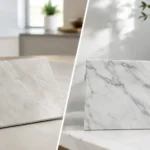
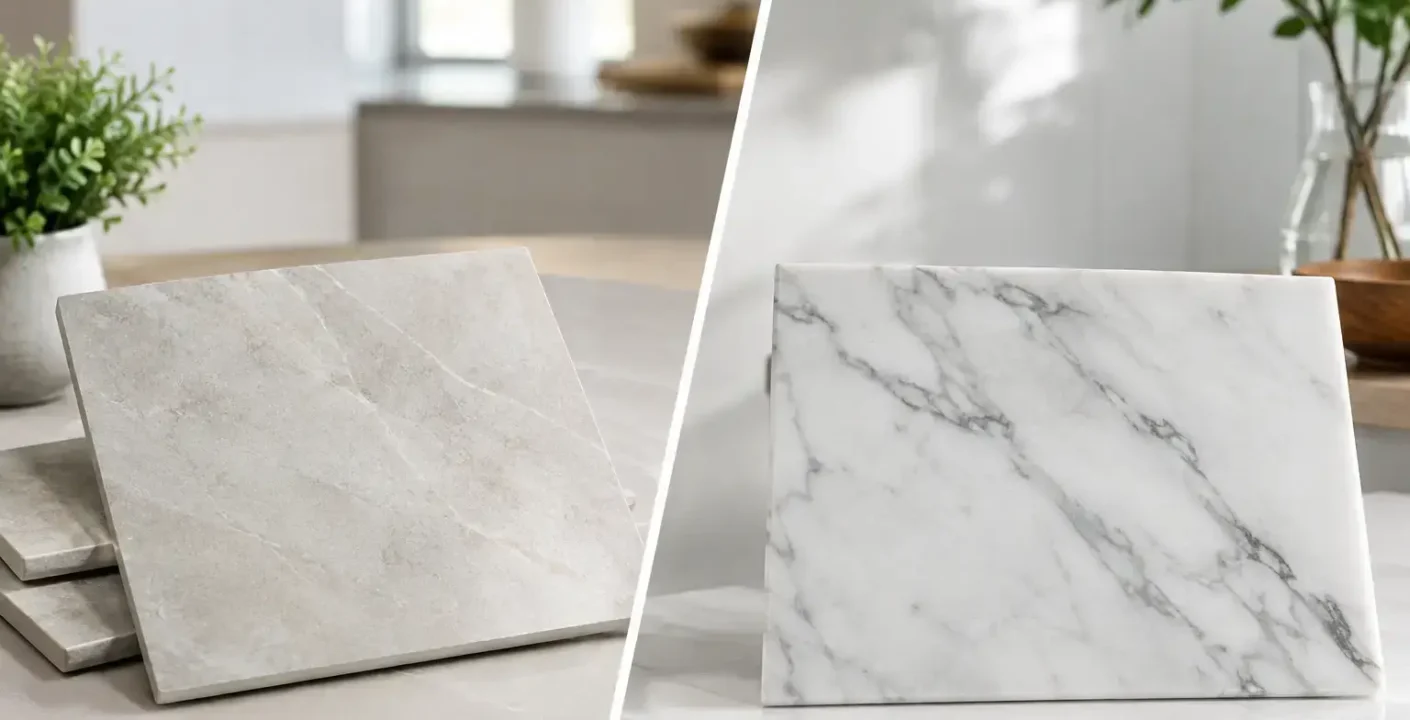
Porcelain is a manufactured tile made from refined clay and minerals, fired at very high temperatures. It is dense, low-porosity, and available in an extensive range of colors, sizes, textures, and stone-look patterns. Modern porcelain can closely resemble natural marble, including veining and variation, while offering a more predictable surface for everyday use.
Marble is a natural stone, formed over time from limestone under heat and pressure. Every slab or tile has distinct veining, color movement, and mineral character. That authenticity is exactly why many homeowners choose it. Marble does not look printed or repeated because it is not. It is a natural material with natural variation.
Neither option is automatically better. Marble delivers a level of depth and visual character that many homeowners find irreplaceable. Porcelain delivers practical durability and easier upkeep, particularly in rooms where water, spills, pets, children, and regular foot traffic are part of daily life.
Appearance: Natural Character or Design Flexibility
Marble is often chosen for statement spaces. A marble vanity top, fireplace surround, shower wall, or entry floor can create a timeless, high-end look that works with traditional, transitional, and contemporary designs. White marble with gray veining remains popular, but warmer cream, taupe, green, and dramatic dark marbles can also create a more individual result.
The trade-off is variation. A sample tile may not fully represent the slab or batch that arrives for a project. Veining, background color, and movement can change significantly from piece to piece. This is part of marble’s appeal, but it requires thoughtful material selection and layout planning.
Porcelain provides more control. Homeowners can choose a clean, consistent look or select a high-quality marble-look porcelain with more variation from tile to tile. Large-format porcelain is especially useful when a homeowner wants the visual impact of stone with fewer grout lines. It can work well on bathroom floors, shower walls, kitchen backsplashes, and open living areas.
A convincing marble-look porcelain is not a substitute for natural marble in every setting. Up close, marble has depth and subtle irregularities that a manufactured product cannot fully duplicate. Still, porcelain has become a strong option for homeowners who want the marble aesthetic without building their routine around protecting a softer stone.
Water, Stains, and Daily Maintenance
This is where the decision often becomes clear. Porcelain is highly resistant to moisture and staining. In a properly installed and grouted shower, it is a dependable material for wet areas. It does not need to be sealed in the way natural stone does, and routine cleaning is usually straightforward with an appropriate nonabrasive cleaner.
Marble is porous and more chemically sensitive. It should be sealed, although sealing reduces absorption rather than making the surface stain-proof. Oil, cosmetics, hair products, wine, coffee, and acidic foods can leave marks if they sit too long. In a bathroom, toothpaste, some soaps, and personal-care products may create dull spots or etching on polished marble.
Etching is different from a stain. A stain changes the color of the stone when a substance is absorbed. Etching changes the surface finish when acid reacts with the calcium in marble. A polished marble countertop can develop cloudy or dull areas from lemon juice or certain cleaners, even if the spill is wiped up quickly.
For some homeowners, this aging is part of the material’s character. For others, it becomes a source of frustration. A family kitchen with frequent cooking and casual cleanup is usually more forgiving with porcelain. A powder room, decorative fireplace surround, or carefully maintained primary bathroom may be a better setting for marble.
Durability Underfoot and in High-Use Rooms
Porcelain is generally harder than marble and resists scratches well. It is a practical choice for mudrooms, busy bathrooms, kitchens, hallways, and main living spaces. Textured or matte porcelain can also provide better traction than polished stone, which matters for shower floors and homes where safety is a priority.
Marble is durable enough for floors and other surfaces, but it is softer than porcelain and can scratch, chip, or show wear over time. Honed marble, which has a softer matte finish, often disguises etching and minor wear better than polished marble. It is worth considering for bathroom floors, shower walls, and countertops where a less reflective finish fits the design.
Location matters as much as material. A polished marble floor can be slippery when wet, particularly in a bathroom. Small mosaic marble tiles with more grout joints can improve traction on a shower floor, but they still require consistent cleaning and sealing. A porcelain tile selected specifically for wet-area slip resistance is often the lower-maintenance choice.
Cost Is More Than the Price of the Tile
Material pricing varies widely for both porcelain and marble. Basic porcelain can be economical, while premium large-format porcelain or designer collections can cost as much as, or more than, some natural stone options. Marble pricing also ranges considerably depending on type, origin, thickness, finish, and availability.
Installation should be part of the budget discussion from the beginning. Large porcelain tiles require a flat substrate, careful layout, proper thinset coverage, and experienced handling to avoid lippage or cracking. Marble requires equally careful preparation, plus planning for color variation, sealing, cutting, and protection during installation.
Natural stone may also carry a higher long-term cost. Periodic resealing, professional stain or etch repair, and the possibility of replacing damaged pieces should be considered. Porcelain typically has lower ongoing maintenance costs, which can make it the stronger value for many active households.
The least expensive material is not always the best value. A well-installed surface that fits the room and the homeowner’s expectations is far more valuable than a premium material that becomes difficult to live with.
Where Each Material Usually Makes Sense
Porcelain is often the practical favorite for shower surrounds, shower floors, kitchen floors, laundry rooms, high-traffic entryways, and homes with children or pets. It is also a smart choice when homeowners want a stone look across a large area without worrying about routine sealing or accidental spills.
Marble can be an excellent fit for a feature wall, fireplace surround, vanity top, decorative backsplash, powder room floor, or a primary bathroom designed around a luxurious natural-stone look. It is especially compelling when the homeowner appreciates patina and understands that real stone will not stay visually perfect in the same way porcelain can.
For a kitchen, the answer often depends on how the space is used. Marble can be beautiful on a baking station or low-use island, while porcelain is usually the more relaxed choice for a heavily used countertop or floor. Some homeowners also combine materials, using marble on a focal-point wall and porcelain on the shower floor or main floor area.
Installation Quality Protects Your Investment
Even the right material can disappoint if it is installed without proper preparation. Subfloors and shower walls must be flat, stable, and properly waterproofed. Tile layout must account for room dimensions, focal points, cuts, and grout joint placement. With marble, installers must also inspect pieces for color and veining so the finished surface looks intentional rather than random.
For porcelain, grout color and tile finish can change the entire appearance of the room. For marble, the choice between polished and honed finishes affects both appearance and how visible etching will be. These are decisions worth reviewing with an experienced remodeling professional before materials are ordered.
At Oak Custom Remodeling, material guidance is part of helping homeowners make decisions they will feel good about after the project is complete. The goal is not simply to install a beautiful surface, but to match that surface to the way a household actually lives.
Before choosing porcelain or marble, bring home samples, place them in the room’s natural light, and be honest about daily routines. The material that supports your design vision while fitting your maintenance expectations is the one that will continue to feel like a good decision years from now.