
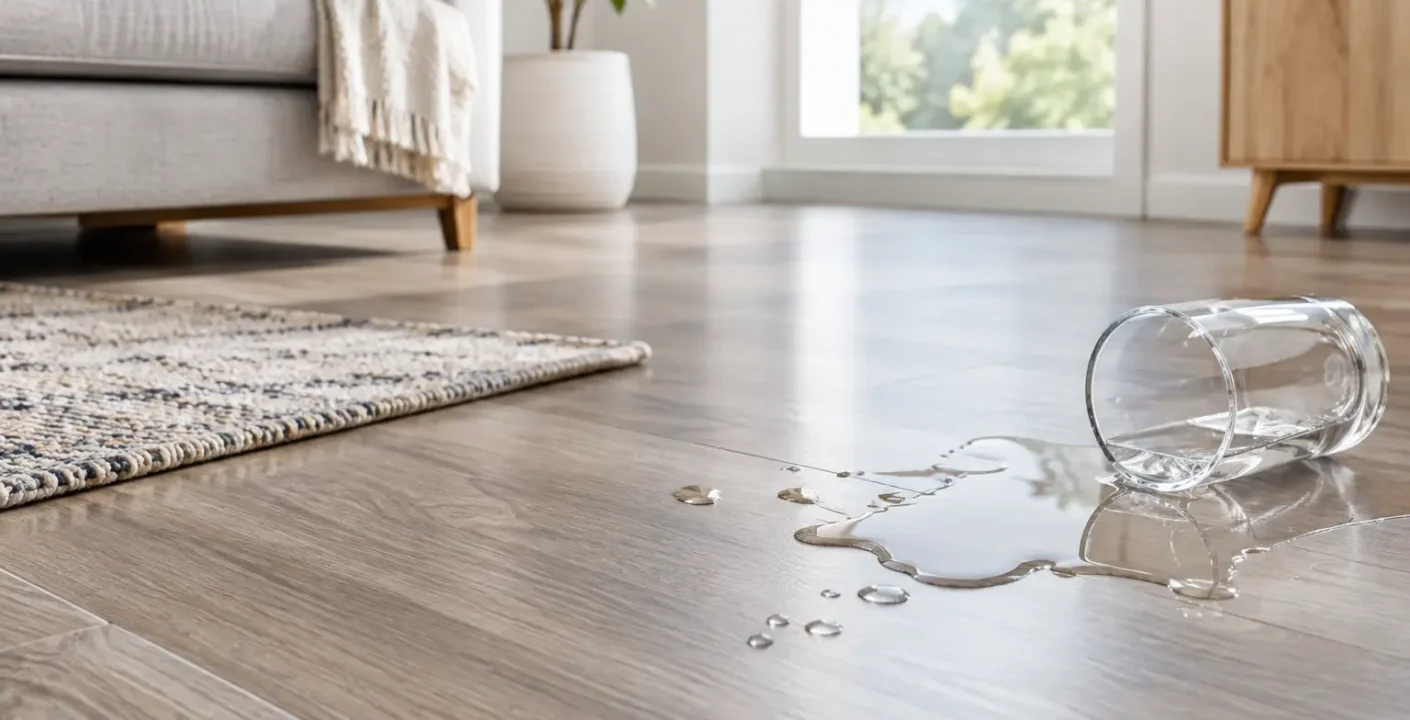
A leaking dishwasher, wet shoes by the back door, and a child’s spilled drink should not turn into a flooring emergency. That is the promise behind waterproof products, but a useful waterproof flooring review has to look beyond the label. Some materials resist surface water exceptionally well but still need careful installation. Others are durable underfoot yet make more sense in certain rooms than others.
For homeowners in Sachse and across the Dallas-Fort Worth area, the right choice depends on where the floor will be installed, how the household uses the room, and what is underneath the existing flooring. A beautiful floor is only a good investment when it can handle real life and is installed correctly.
What “Waterproof” Actually Means
Waterproof flooring is designed to prevent water from damaging the flooring material during normal household exposure. In practical terms, that means a spill can sit on the surface long enough to be wiped up without causing the planks or tiles to swell, curl, or separate.
That does not mean every part of the finished floor is invincible. Water can still work its way through an unsealed perimeter, beneath a loose transition, or through a plumbing leak that goes unnoticed. Moisture trapped below the flooring can affect the subfloor, encourage mildew, and create odors even when the visible surface looks fine.
This distinction matters most in bathrooms, laundry rooms, kitchens, and entryways. Waterproof flooring protects against everyday accidents. It is not a substitute for repairing leaks, waterproofing a shower correctly, or addressing moisture problems in a concrete slab.
Waterproof Flooring Review: The Main Options
The best product is rarely the one with the boldest marketing claim. It is the one that fits the room, the household, and the condition of the home.
Luxury Vinyl Plank and Luxury Vinyl Tile
Luxury vinyl plank, often called LVP, is one of the most practical waterproof flooring choices for busy households. Its layered construction gives it a water-resistant core and a protective wear layer, while modern printing and texture can closely resemble hardwood, stone, or ceramic tile.
For many North Texas homeowners, LVP works well because it is warmer and softer underfoot than tile, easy to clean, and available in a wide range of styles. It is especially popular for open floor plans where homeowners want a continuous look through the kitchen, living areas, hallways, and bedrooms.
The trade-off is that quality varies significantly. Lower-cost vinyl can dent under heavy furniture, show wear faster, or have a less convincing texture. A thicker wear layer and a reputable product line typically offer better long-term performance. Proper subfloor preparation is also essential. Vinyl can reveal low spots, ridges, and imperfections beneath it, particularly in rooms with strong natural light.
Porcelain and Ceramic Tile
Porcelain tile is one of the most dependable choices for areas with frequent moisture. It does not absorb water easily, stands up well to spills, and offers exceptional longevity when installed over a properly prepared surface. Ceramic tile can also perform well, though porcelain is generally denser and better suited to high-traffic areas.
Tile is a natural fit for bathrooms, laundry rooms, mudrooms, and kitchens. It also gives homeowners extensive design flexibility, from clean large-format tiles to classic patterns that support a more traditional home.
Its main drawbacks are comfort and installation complexity. Tile feels harder and cooler underfoot, which some homeowners notice during early mornings in the bathroom or while standing at the kitchen counter. Grout requires ongoing care, and the installation must account for floor flatness, movement, and waterproofing details. A tile floor that is installed poorly can crack or develop loose sections even if the tile itself is high quality.
Waterproof Laminate
Waterproof laminate has improved considerably and can be a good choice for homeowners who want a wood-look floor with strong scratch resistance. Its visual texture can be more convincing than some vinyl products, and it often performs well in family rooms, hallways, bedrooms, and kitchens where spills are cleaned up promptly.
Still, homeowners should read the warranty closely. Some waterproof laminate products protect against topical spills for a stated period, while others have limits around standing water, wet mopping, or water entering at the edges. The core may be more protected than older laminate, but it is not always as forgiving as vinyl or porcelain tile in a frequently wet bathroom or laundry room.
Waterproof laminate is often a solid middle-ground option, not an automatic choice for every moisture-prone room. It works best when the room has normal daily activity rather than repeated puddles or heavy water exposure.
Engineered Hardwood
Engineered hardwood brings genuine wood to the home, with a layered construction that is more stable than solid hardwood. Some products offer enhanced water resistance, which can make them suitable for carefully managed kitchens and main living areas.
However, water-resistant and waterproof are not the same thing. Wood remains vulnerable to excessive moisture, standing water, and leaks that reach the edges or underside of the planks. For a homeowner who wants real hardwood character, engineered wood can be a worthwhile investment in the right spaces. It is generally not the first recommendation for a full bathroom, laundry room, or any area with routine wet conditions.
Room-by-Room Decisions Matter
A single floor throughout the house can create a clean, updated look, but it should not force a material into a room where it will struggle. Vinyl is often the most flexible whole-home choice when a consistent style is the goal. Porcelain tile may be the smarter choice for a bathroom that sees daily showers, splashing, and humidity.
In a kitchen, the decision often comes down to comfort versus maximum durability. LVP is comfortable for cooking and forgiving when dishes fall. Tile provides stronger resistance to water and heat but feels firmer underfoot. For a laundry room, vinyl or tile is usually the safer long-term choice because appliance leaks can involve more water than a typical kitchen spill.
Entryways deserve special attention in North Texas. Rain, mud, pet paws, and outdoor debris can wear down a floor quickly. A durable tile or high-quality vinyl product is generally easier to maintain than a material that needs moisture managed carefully.
Installation Is Part of the Product’s Performance
Even the best waterproof flooring can fail if installed over an unsuitable surface. Before new flooring goes down, the subfloor should be inspected for moisture damage, uneven areas, loose material, and signs of prior leaks. In homes built on concrete slabs, moisture testing may be appropriate before installation, especially when there is a history of flooring problems.
Bathrooms require another layer of planning. Flooring alone does not waterproof a bathroom. Proper shower waterproofing, secure toilet connections, caulking where appropriate, and thoughtful transitions all protect the home from water reaching places it should not go.
Expansion gaps and perimeter details matter with floating floors such as many vinyl and laminate products. Those gaps allow the material to move naturally with temperature changes. Covering them incorrectly or pinching the floor beneath cabinets and trim can create buckling or separation later.
This is where experienced installation pays off. A professional can identify whether a floor needs leveling, whether existing material should be removed, and whether a product is appropriate for the room before the project reaches the finishing stage.
How to Compare Products Without Getting Lost in Samples
When reviewing samples, look at more than color. Ask how the product handles standing water, whether the warranty covers kitchens or bathrooms, and what cleaning methods are allowed. Confirm the wear-layer thickness for vinyl, the abrasion rating for laminate, and the grout and waterproofing plan for tile.
It also helps to bring home samples and view them in the actual room. North Texas sunlight can change how gray, brown, and white tones appear throughout the day. A sample that looks warm under showroom lighting may look cooler or more yellow near a large window.
Think about sound, comfort, and maintenance as well. A household with dogs and children may prioritize scratch resistance and easy cleanup. A homeowner planning to age in place may prefer flooring with more slip resistance and fewer abrupt height changes between rooms. Resale value matters, but the floor should first support the people living on it now.
A Practical Choice for Long-Term Value
The strongest waterproof flooring choice is not always the most expensive one. It is the material that matches the room’s moisture exposure, the home’s existing conditions, and the level of maintenance the household can realistically provide. A well-selected vinyl floor can outperform a poorly chosen hardwood product in a busy kitchen, while properly installed porcelain tile can serve a bathroom for decades.
At Oak Custom Remodeling, we encourage homeowners to make flooring decisions alongside the larger remodeling plan. When the layout, cabinetry, plumbing, transitions, and floor material work together, the result feels finished rather than pieced together. Choose a floor that gives you confidence when life gets messy, then make sure the preparation and installation are worthy of that choice.