

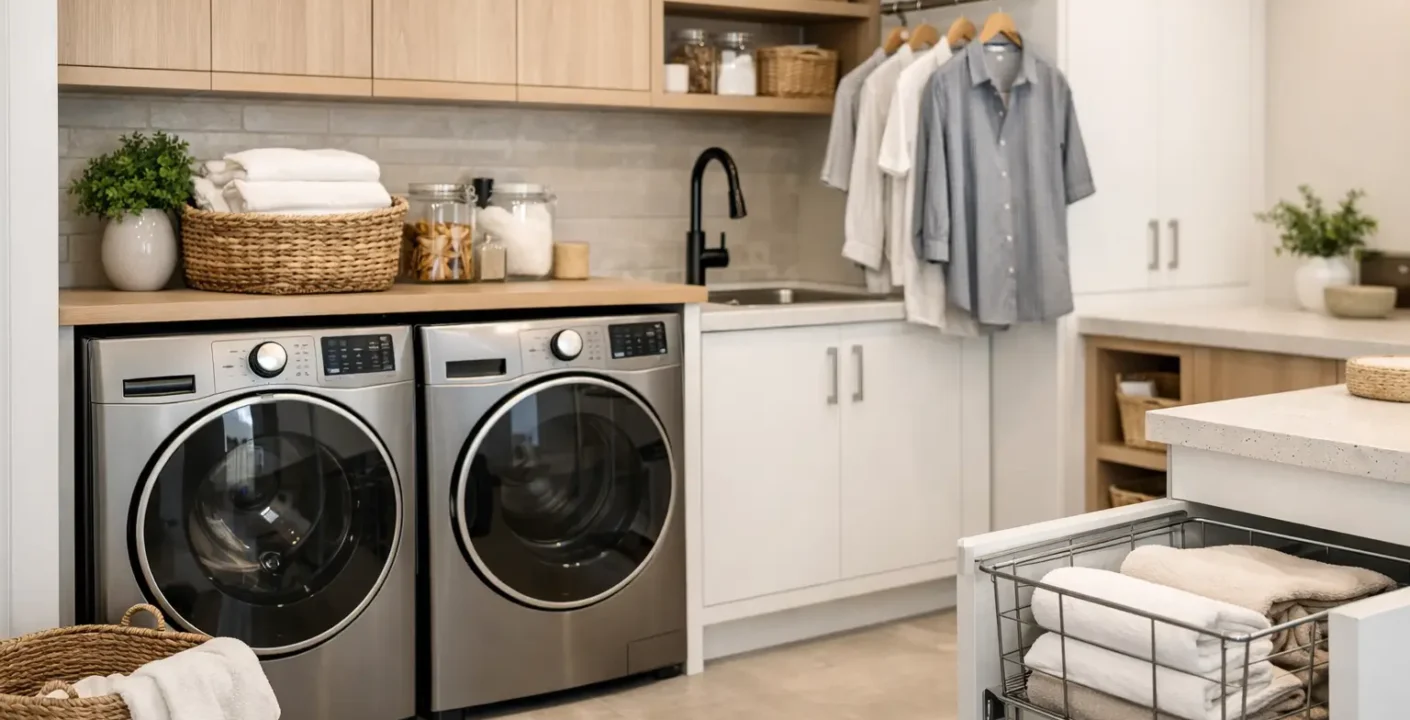
A laundry room usually gets attention only when it stops working well. The shelves sag, the machines shake the walls, the floor stays damp, and there is never a good place to sort, fold, or store anything. That is why the best laundry room remodel ideas are not just about making the space look nicer. They are about fixing the daily friction that makes a routine chore feel harder than it should.
In many North Texas homes, the laundry room is either too small, poorly laid out, or treated like an afterthought. A smart remodel changes that. It can improve storage, reduce mess, protect nearby finishes from moisture, and make the room easier to use for years to come. If you are planning an update, the right ideas start with function first and style second.
Laundry room remodel ideas that solve real problems
The strongest remodel plans begin with how your household actually uses the space. A family with young kids may need room for backpacks, muddy shoes, and extra cleaning supplies. A couple focused on resale may care more about a polished finish and efficient storage. The right answer depends on the room size, your routines, and whether this is a standalone laundry room or part of a mudroom.
One of the most effective upgrades is improving the layout around the washer and dryer. If your current setup forces you to twist, reach, or block doorways every time you do a load, the room is working against you. Even a small shift in appliance placement, cabinetry depth, or door swing can make the room feel larger and easier to use.
1. Add cabinets that go all the way up
Open shelves can look clean in photos, but in everyday life they often collect clutter. Full-height cabinets give you better storage for detergent, paper goods, pet supplies, and seasonal items without leaving everything visible. They also make a small room feel more intentional and finished.
There is a trade-off, though. In a very tight laundry room, too many upper cabinets can make the space feel boxed in. A balanced approach often works best, with closed storage for less attractive items and a small open area for baskets or frequently used supplies.
2. Build in a folding surface
One of the most requested features in laundry room remodel ideas is a dedicated folding counter. This sounds simple, but it changes how the room functions. Instead of carrying clean clothes to another room, you can sort and fold right where the laundry comes out.
If space is limited, a countertop installed above front-load machines is often the best use of square footage. In a larger room, a side counter with lower cabinets adds even more workspace. Durable surfaces matter here. Quartz is easy to maintain, while laminate can be budget-friendly if the room is not exposed to heavy wear.
3. Include a utility sink if the room allows it
A utility sink is one of those features homeowners often do not realize they need until they have one. It is useful for hand-washing delicate items, rinsing out paint brushes, cleaning up after pets, and tackling messes that should not go in a kitchen or bathroom sink.
The key question is whether the sink earns its space. In a very compact room, forcing one in may hurt the layout more than it helps. In a larger laundry room or combined mudroom, it is usually worth strong consideration.
Storage matters more than square footage
A laundry room does not have to be large to be efficient. It does need organized storage that fits your household. That means thinking beyond detergent bottles and dryer sheets.
Hampers, baskets, hanging rods, pull-out bins, and tall broom storage all play a role. If the room is handling overflow from the garage, kitchen, or entryway, the cabinetry should reflect that. This is where custom solutions often outperform off-the-shelf options. A room with awkward corners or limited wall width benefits from storage built specifically for the space.
4. Use vertical storage for cleaning tools and overflow items
Tall cabinets with adjustable shelving can store brooms, mops, vacuums, and extra household supplies without crowding the floor. This is especially useful in homes where the laundry room doubles as a utility hub.
Vertical storage also improves the look of the room. When everyday items have a place behind closed doors, the space feels calmer and easier to maintain.
5. Add a hanging rod or drying area
Not everything belongs in the dryer. A simple hanging rod under an upper cabinet or recessed into a niche gives you a place for air-dry clothing and freshly ironed items. In a busy household, this small feature can prevent clean laundry from ending up draped over doors and chairs.
If you have the room, a wall-mounted drying rack is another practical option. It folds away when not in use, which makes it a good fit for tighter spaces.
Choose finishes that can handle real use
A laundry room sees more wear than many people expect. Water, heat, detergent spills, vibration, and frequent foot traffic all affect how long materials hold up. That is why smart material selection is one of the most important laundry room remodel ideas, even if it is not the most exciting part of the project.
Flooring should be durable and moisture-resistant. Tile is a strong choice because it handles water well and is easy to clean. Luxury vinyl can also perform well if you want a softer feel underfoot and a lower price point. Hardwood is usually not the first recommendation in this room because repeated moisture exposure can create long-term issues.
For walls, washable paint matters. Lighter colors tend to make smaller laundry rooms feel more open, but darker cabinetry can add contrast and make the room feel more custom. The right finish depends on the size of the space, the amount of natural light, and how the room connects to nearby areas of the home.
6. Improve lighting before you pick decorative details
Poor lighting makes every laundry room feel less functional. You want bright, even illumination that helps with sorting stains, reading care labels, and keeping the room safe and comfortable to use.
Recessed lighting is often a practical base layer. Under-cabinet lighting can help over folding surfaces, and a flush-mount decorative fixture may work in larger rooms. Natural light is a bonus, but most laundry rooms still need strong artificial lighting to feel complete.
7. Upgrade ventilation and moisture control
This is not the flashy part of a remodel, but it matters. Proper dryer venting, airflow, and moisture-resistant materials help prevent problems that can affect indoor air quality and long-term maintenance. If your existing room feels humid or traps heat, the remodel should address that directly rather than just covering it with nicer finishes.
Design for the way your home actually works
Some of the best remodels happen when the laundry room is treated as part of a bigger system. If it connects to the garage, consider mudroom storage. If it sits near the kitchen, use finishes that feel coordinated without being too formal. If it is visible from a hallway, make sure the design looks intentional when the door is open.
8. Create zones for sorting, washing, and putting away
Even a small room benefits from defined task zones. Dirty laundry should have a clear drop area. Clean laundry should have a place to land for folding or hanging. Supplies should be reachable but not in the way.
This kind of planning reduces frustration more than many cosmetic upgrades. It also helps family members use the room consistently, which matters if more than one person handles laundry.
9. Think about noise and vibration
Laundry rooms near bedrooms, kitchens, or living spaces can create more disruption than expected. During a remodel, it may be worth addressing insulation, flooring underlayment, or appliance placement to reduce vibration and noise transfer.
This is especially relevant in two-story homes or in layouts where the laundry room is close to high-traffic family spaces. It is not always necessary, but when noise has been an ongoing annoyance, it should be part of the remodel conversation.
10. Make room for future needs
A remodel should work for your household now, but it should also age well. That may mean choosing easier-to-clean finishes, adding better storage, or planning for appliance upgrades down the road. If you expect to stay in the home long term, accessibility and convenience features become more valuable over time.
11. Do not overlook resale value
Laundry rooms are not usually the headline feature when a home sells, but buyers notice when these spaces are clean, functional, and thoughtfully designed. A well-remodeled laundry room supports the overall impression that the home has been cared for.
That does not mean overbuilding. In most cases, the best return comes from quality materials, practical storage, and a layout that makes sense. Spending heavily on luxury finishes while ignoring workflow usually does not pay off the way homeowners hope.
A good remodel starts with honest priorities
Before selecting tile or cabinet colors, decide what your current laundry room does poorly. Maybe it lacks storage. Maybe it feels cramped. Maybe it works, but it looks dated compared to the rest of the home. Clear priorities lead to better decisions and fewer change orders once the work begins.
For homeowners in Sachse and the greater Dallas-Fort Worth area, remodeling choices often come down to a balance of function, budget, and long-term value. That is where experience matters. A contractor who understands layout, cabinetry, flooring, and how these pieces work together can help avoid expensive missteps and turn a frustrating utility space into one of the most useful rooms in the house.
If your laundry room has become a daily inconvenience, that is usually a sign it is time to rethink the space. The best remodel does not need to be oversized or overly complicated. It just needs to make everyday life easier every time you use it.