

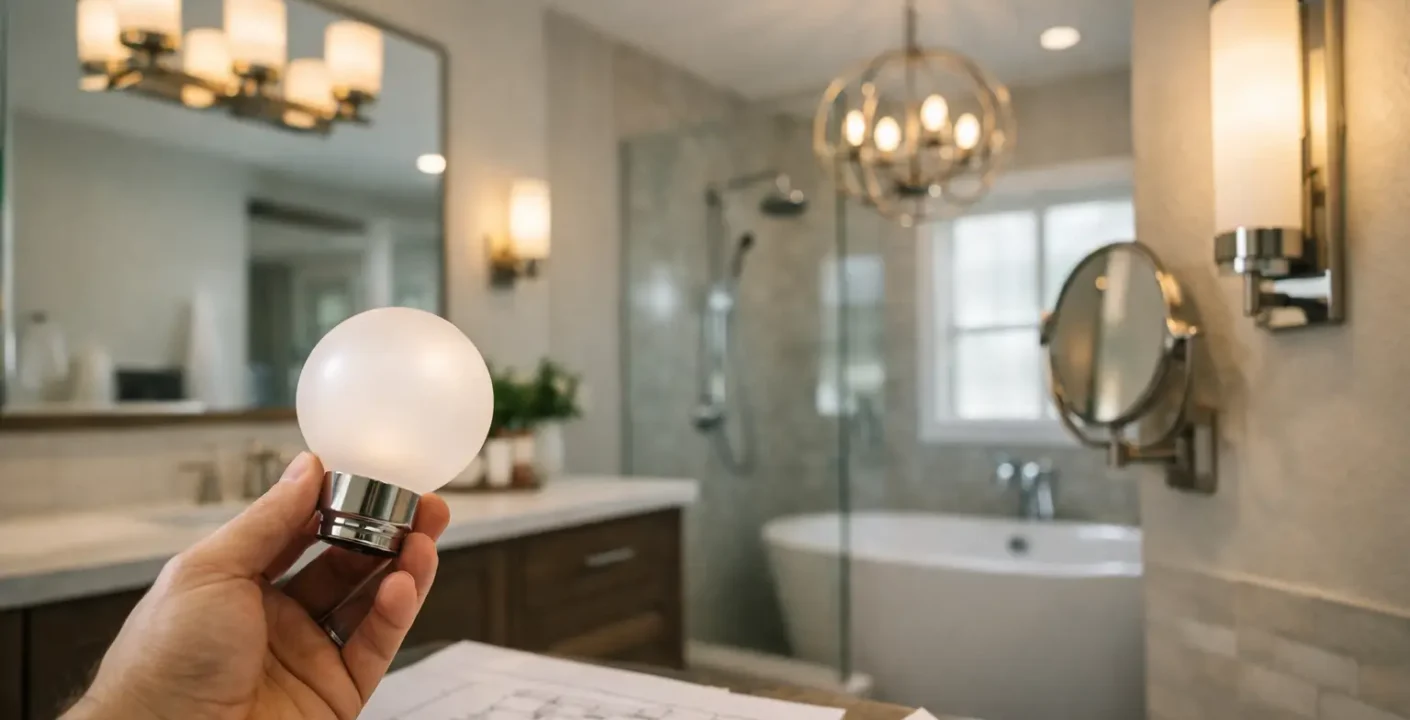
A bathroom can have beautiful tile, a well-built vanity, and new fixtures, yet still feel unfinished if the lighting is wrong. Homeowners often find this out at the mirror, where overhead shadows make shaving, makeup, and morning routines harder than they should be. Knowing how to select bathroom lighting means planning for the way the room is actually used, not simply choosing a fixture that looks good online.
For a successful bathroom remodel, lighting should make daily tasks easier, support the mood you want in the space, and work safely in a damp environment. The best results usually come from layering several types of light instead of relying on one ceiling fixture.
Start With the Bathroom’s Daily Routine
Before choosing finishes, bulb shapes, or decorative fixtures, consider who uses the bathroom and when. A hall bathroom used by children before school needs bright, dependable task lighting. A primary bathroom may need the same practical light at the vanity, plus softer options for an evening shower or bath.
Room size also matters. A compact powder room can feel brighter with a carefully placed vanity light and a ceiling fixture. A larger primary bathroom with a separate tub, shower, water closet, and double vanity needs more intentional coverage. One central fixture rarely provides enough useful light for all of those areas.
Natural light changes the equation but does not replace a lighting plan. A bathroom with a large window may feel bright at noon, then become dim at the exact time most family members are getting ready. Plan your artificial lighting so the room works well before sunrise, after sunset, and on cloudy North Texas days.
How to Select Bathroom Lighting in Layers
The most comfortable bathrooms combine ambient, task, accent, and, when appropriate, decorative lighting. Each layer has a different job. Together, they prevent dark corners, harsh shadows, and the flat, overly bright look that comes from a single fixture.
Ambient lighting creates an even foundation
Ambient lighting is the general illumination that lets you move through the room safely. Recessed ceiling lights, a flush-mount fixture, or a well-chosen central fixture can provide this base layer. In larger bathrooms, multiple recessed lights often create more even coverage than one oversized ceiling fixture.
Placement matters as much as quantity. A recessed light directly over a person standing at the vanity can cast shadows on the face. Instead, use ceiling lights to fill the room while relying on dedicated vanity lighting for close-up grooming. Recessed lighting also needs to be positioned thoughtfully around shower walls, cabinets, and ceiling beams so it illuminates usable space rather than empty areas.
Task lighting belongs at the mirror
Task lighting is the layer homeowners notice most. The goal is to light the face evenly from the front and sides. Vertical sconces mounted on both sides of a mirror usually provide the most flattering, functional result because they reduce shadows under the eyes, nose, and chin.
When side sconces are not practical due to a narrow wall, a wide fixture installed above the mirror can work well. Choose a fixture broad enough to distribute light across the mirror rather than concentrating it in the middle. The fixture should also be mounted at a height that provides useful light without creating glare in the mirror.
For a double vanity, do not assume one light fixture will serve both users equally. Depending on the size of the mirror and vanity, two separate mirror-lighting zones may offer better performance and a more balanced appearance. This is especially helpful during busy mornings when two people are using the space at once.
Accent and decorative lighting add comfort
Accent lighting is not required in every bathroom, but it can make a remodeled space feel more considered. A small pendant over a freestanding tub, toe-kick lighting beneath a floating vanity, or a subtle light in a linen niche can create depth without taking away from practical lighting.
Decorative fixtures should support the room, not overpower it. A statement chandelier can look striking over a tub in a large bathroom with the right ceiling height. In a smaller room, however, it may make the space feel crowded and leave essential areas underlit. The practical question is always the same: Does the fixture improve how the bathroom works, or is it only filling visual space?
Choose the Right Brightness and Bulb Color
Brightness is measured in lumens, and the needed amount depends on the room’s size, finishes, and lighting layers. Dark cabinetry, charcoal tile, and matte black finishes absorb more light than white walls and reflective surfaces. A bathroom with darker materials may need additional fixtures or higher-output bulbs to feel equally bright.
Rather than focusing only on total lumens, consider where the light falls. A bright ceiling light cannot fully compensate for a poorly lit mirror. Put sufficient output where tasks happen, then use dimmers to control the overall mood.
For most bathrooms, a color temperature around 3000K to 4000K is a practical range. Lighting near 3000K feels warm and welcoming, which suits bathrooms designed as a calm retreat. Lighting closer to 4000K appears cleaner and more neutral, making it useful for detailed grooming. The best choice depends on your tile colors, vanity finish, and personal preference.
Also look for a high Color Rendering Index, commonly called CRI. A CRI of 90 or higher helps skin tones, paint colors, and finishes look more accurate. This detail is easy to overlook, but it makes a meaningful difference when applying makeup, selecting clothing, or checking the true color of materials in the mirror.
Plan for Moisture, Safety, and Electrical Needs
Bathrooms are wet locations, so fixture selection cannot be based on appearance alone. Lighting installed near a shower, tub, or other water source may need a damp-location or wet-location rating. The exact requirement depends on where the fixture is installed and local code requirements.
This is one reason lighting should be planned early in a remodel. Moving junction boxes, adding recessed lights, wiring sconces, and installing dimmer switches are much easier before drywall is closed and finishes are complete. A remodeler can coordinate the fixture layout with mirror size, cabinet placement, ventilation, and electrical requirements rather than forcing a solution after the fact.
Dimmers are worth considering for nearly every full bathroom. They allow bright light for cleaning and grooming, then lower light for a nighttime routine. If you choose LED fixtures or bulbs, confirm that the dimmer is compatible. An incompatible switch can cause flickering, buzzing, or a limited dimming range.
Coordinate Lighting With Mirrors and Finishes
Bathroom lighting should be selected alongside the mirror, not after it. The width, height, frame depth, and mounting location of a mirror all affect which fixtures will fit and where they can be placed. A large framed mirror may leave little room for side sconces, while separate mirrors above a double vanity create natural locations for individual light fixtures.
Finish coordination should feel intentional, but it does not require every metal to match exactly. Brushed nickel lighting can work with chrome plumbing fixtures, and warm brass can complement black hardware when the overall design has a clear direction. What matters is that the finish choices repeat with purpose instead of appearing accidental.
Consider the scale as well. A small fixture above an oversized vanity often looks undersized and provides weak task lighting. On the other hand, overly large sconces can crowd a narrow mirror or interfere with cabinet doors. Reviewing fixture dimensions against the actual wall plan helps prevent expensive last-minute changes.
Common Bathroom Lighting Mistakes to Avoid
The most common mistake is treating lighting as a final shopping decision. By that point, the vanity, mirrors, and electrical locations may already limit the choices. Another frequent issue is choosing a fixture based on its appearance without checking its output, rating, or compatibility with a dimmer.
Homeowners also sometimes install only cool, bright lighting because it seems more practical. While bright light is useful at the mirror, a bathroom lit entirely at a harsh color temperature can feel clinical. Layered lighting and dimmer controls offer a better balance between clear visibility and everyday comfort.
Finally, do not overlook the value of professional installation and coordinated planning. At Oak Custom Remodeling, bathroom lighting is considered as part of the full room design, including layout, tile, mirrors, cabinetry, and the way your household uses the space.
A well-lit bathroom does more than photograph well after the remodel is finished. It makes rushed mornings easier, late-night visits safer, and the room more enjoyable for years. Choose lighting early, test the plan against your daily routine, and give every important area the light it deserves.