
A dated kitchen does not always need a full demolition. If your cabinet boxes are solid, level, and still work well for your household, cabinet refacing options can provide a major visual upgrade without replacing every cabinet in the room. The right choice can update worn finishes, improve the door style, and give your kitchen a more current look while keeping the project focused on the parts that truly need attention.
For homeowners in Sachse and across the Dallas-Fort Worth area, the decision often comes down to more than appearance. You want a kitchen that fits your daily routine, supports the value of your home, and is completed with a clear plan. Refacing can be an excellent middle ground, but only when the existing cabinetry is worth keeping.
What Cabinet Refacing Actually Includes
Cabinet refacing is more involved than painting existing doors. During a typical refacing project, the cabinet boxes remain in place while their visible exterior surfaces are covered with a new veneer or laminate. New doors, drawer fronts, hinges, and hardware are installed to match the new finish and style.
This approach changes the face of the kitchen while preserving the cabinet layout. It can be a practical choice when you are happy with the location and basic storage capacity of your cabinets but dislike their finish, door profile, or outdated hardware.
Refacing is not a solution for every cabinet problem. Water damage, sagging boxes, poor drawer function, major layout limitations, or low-quality construction may point to cabinet replacement instead. A careful in-home assessment should come before selecting materials or colors.
Cabinet Refacing Options by Material
The finish material plays a major role in how your refaced cabinets look, feel, and hold up over time. There is no one best material for every kitchen. Your budget, design goals, and how heavily the kitchen is used should guide the decision.
Wood Veneer Refacing
Wood veneer is a thin layer of real wood applied to the cabinet box surfaces. It is often paired with new solid wood or wood-based doors and drawer fronts. Because it has natural grain and variation, wood veneer can give a kitchen a warm, high-end character that works especially well in traditional, transitional, and modern organic designs.
Popular species include oak, maple, cherry, hickory, and walnut. Oak can be a smart fit for homeowners who want visible texture and durability, while maple provides a smoother, more uniform appearance for painted or stained finishes.
The trade-off is cost. Real wood materials and detailed finishing work generally cost more than laminate alternatives. Wood also needs proper sealing and care, especially near sinks, dishwashers, and other areas exposed to moisture.
Laminate Cabinet Refacing
Laminate is a durable manufactured surface available in a wide range of solid colors, wood looks, and contemporary textures. It is often selected for its consistent appearance, easy cleaning, and budget-conscious price point.
A quality laminate can be a practical choice for busy family kitchens. It resists many common stains and does not require the same maintenance as natural wood. It can also create a clean, streamlined look in white, gray, black, or warmer wood-tone finishes.
However, laminate does not have the depth or natural variation of wood. Edge details and installation quality matter greatly. If seams are poorly finished or moisture reaches an exposed edge, the material can eventually lift or chip. This is one reason professional installation matters as much as the product selection.
Thermofoil Doors and Drawer Fronts
Thermofoil is a vinyl-like material heat-fused over an engineered wood core. It is commonly used for new cabinet doors and drawer fronts, often with smooth slab fronts or routed details. Thermofoil can offer a clean painted appearance at a lower price than painted wood.
It is a good fit for homeowners who want a simple, low-maintenance look and do not need the grain variation of real wood. White thermofoil remains popular in bright, updated kitchens.
Its limitation is heat sensitivity. Areas near ovens, ranges, and heat-producing appliances need thoughtful planning, and damaged thermofoil is difficult to repair invisibly. For a kitchen that gets intense daily use, other door materials may offer better long-term durability.
Door Styles Can Change the Entire Room
Material is only half of the decision. New door and drawer-front styles often create the most noticeable visual change during a refacing project.
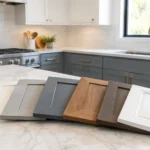
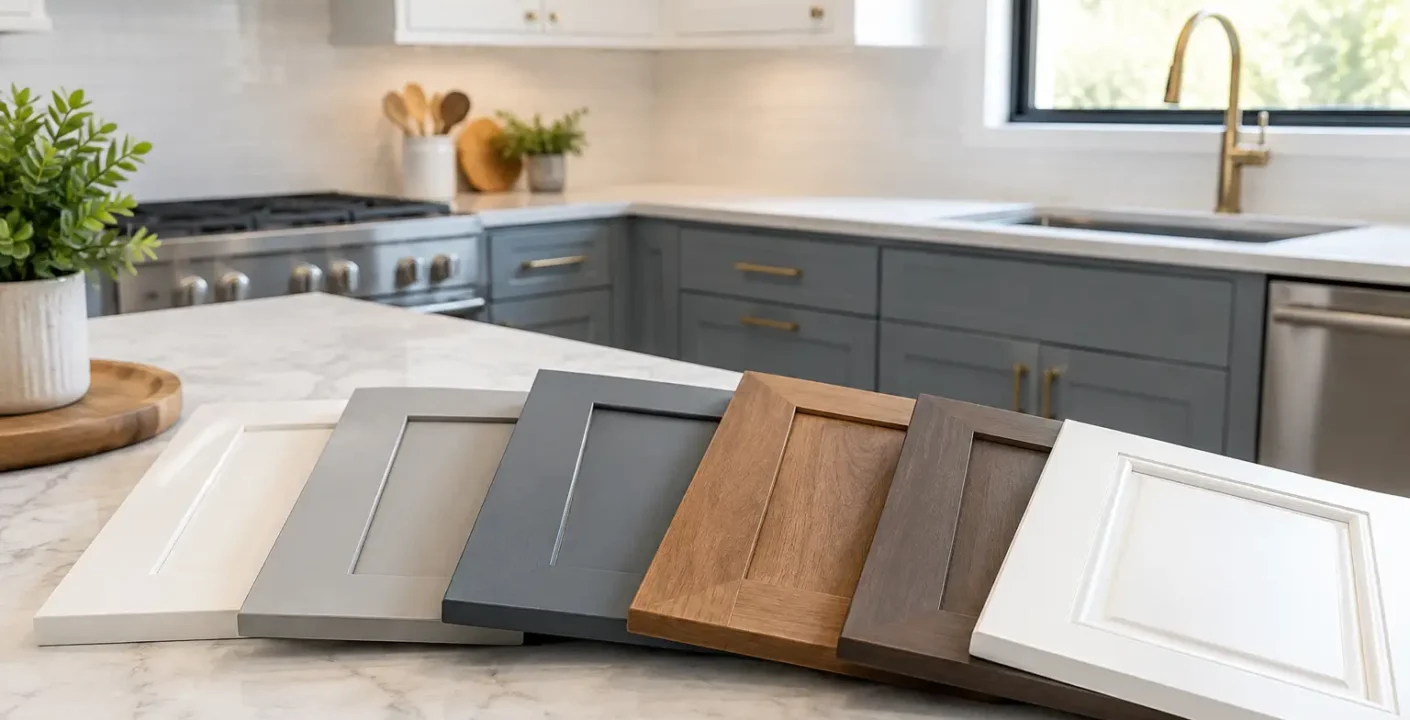
Shaker doors remain a reliable choice because they fit many homes, from traditional brick houses to newer North Texas builds. Their clean frame-and-panel design works well with painted finishes, natural wood tones, and a wide range of hardware.
Raised-panel doors bring more decorative detail and can suit formal or traditional kitchens. Flat-panel or slab doors are a stronger fit for contemporary spaces, particularly when paired with long pulls, integrated handles, or a simple horizontal grain.
The best style depends on the rest of the home. A very modern door profile may feel disconnected in a more traditional house, while heavily detailed doors can make a smaller kitchen feel busy. Looking at the backsplash, flooring, countertops, and adjacent living spaces helps keep the final design cohesive.
When Refacing Is a Smart Investment
Refacing tends to make financial sense when the cabinet boxes are structurally sound and the existing layout still supports the way you cook, store items, and gather in the kitchen. Keeping the boxes in place may reduce demolition, shorten the timeline, and avoid the expense of rebuilding the entire cabinet system.
It is especially useful when your goals are mainly cosmetic: replacing dated golden oak, upgrading worn doors, changing the finish, or coordinating cabinetry with new countertops and flooring. Adding soft-close hinges, full-extension drawer glides, pull-out trays, or updated hardware can make the finished kitchen feel more functional as well.
A refacing project can also work well as part of a broader kitchen update. New countertops, a tile backsplash, lighting, paint, and flooring can complement the cabinetry and create a more complete result. The key is planning the order of work so each improvement fits the next.
When Cabinet Replacement Is the Better Choice
Refacing cannot correct every problem hidden behind cabinet doors. If the boxes are made from weak particleboard, have water damage under the sink, show signs of pest damage, or are pulling away from the wall, replacement is usually the wiser long-term decision.
Replacement is also worth considering if the layout causes daily frustration. A cramped walkway, insufficient drawers, awkward corner storage, or limited counter space may be better addressed through a redesigned kitchen plan. Refacing preserves the footprint, so it cannot create an island, move a range, or make room for a larger pantry.
Homeowners who want custom cabinet sizing, ceiling-height storage, specialized appliance cabinets, or a major style change may get more value from new cabinetry. The upfront investment is higher, but the result can better match the home and the household’s long-term needs.
Questions to Ask Before Choosing a Refacing Contractor
The quality of the existing cabinets and the quality of the installation will determine whether refacing feels like a lasting upgrade or a temporary fix. Before work begins, ask how the cabinet boxes will be inspected, what material will cover exposed surfaces, and whether the new doors and drawer fronts are made to fit your specific cabinetry.
Also ask about preparation around plumbing, appliances, countertops, and flooring. Cabinet projects often affect more than cabinets, and clear coordination prevents avoidable delays or surprise costs. A detailed scope should explain what is included, how hardware will be selected, and what condition the surrounding finishes should be in before installation.
At Oak Custom Remodeling, kitchen decisions are approached with the same practical focus used across larger home renovation projects: evaluate what is working, identify what is holding the space back, and recommend work that makes sense for the property.
A good refacing plan should leave you with more than attractive doors. It should give you a kitchen that feels easier to use, fits the character of your home, and remains a confident investment for years to come.