
A floor can look excellent in a showroom and still be the wrong choice for a busy home. This luxury vinyl plank review looks past the display sample to answer the questions that matter in North Texas: How does it handle kids, pets, spills, humidity, heavy furniture, and the daily wear of an active household?
Luxury vinyl plank, often called LVP, has become a leading flooring choice for kitchen remodels, bathroom updates, laundry rooms, and whole-home renovations. It offers the appearance of hardwood with a lower price point and much less concern about water exposure. Still, not every LVP product performs the same, and a successful result depends as much on material selection and installation as it does on color.
What Luxury Vinyl Plank Is Made to Do
LVP is a synthetic flooring material built in layers. The printed design layer provides the wood appearance, while a clear wear layer protects that design from scratches, stains, and routine foot traffic. Beneath it is a rigid or flexible core, followed by a backing that may add cushioning or help control sound.
The strongest reason homeowners choose LVP is practical durability. A quality product can handle the everyday realities that make natural hardwood difficult in certain rooms: wet shoes near an entry, a dishwasher leak caught quickly, a dog’s water bowl, or children coming in from the backyard.
It is also more stable than many wood products when indoor humidity changes. That is useful in the Dallas-Fort Worth area, where air conditioning runs hard for much of the year and seasonal weather can bring sharp shifts in moisture levels.
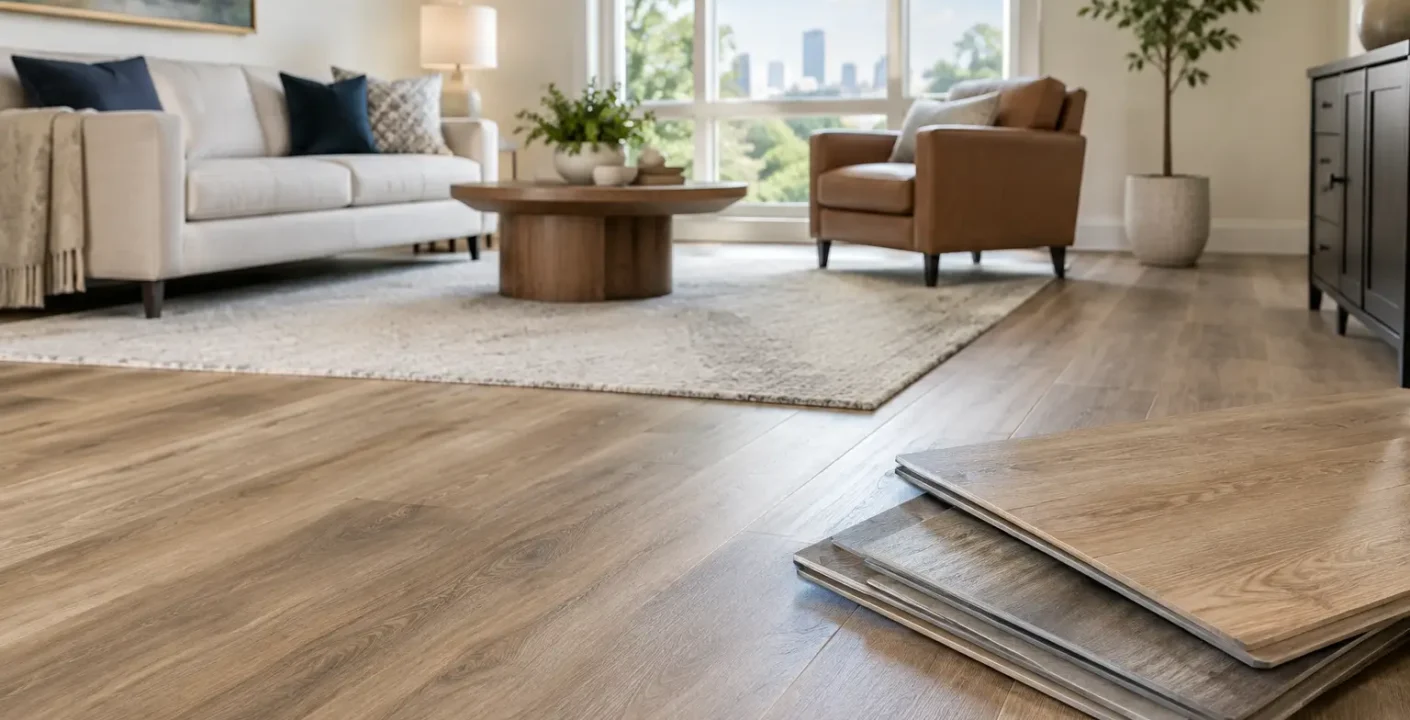
The visual improvement can be substantial. Modern planks offer believable grain patterns, matte finishes, embossed textures, and wider board styles that work well in both traditional and contemporary homes. From a few feet away, higher-quality LVP can be difficult to distinguish from wood.
Luxury Vinyl Plank Review: Where It Performs Best
LVP is particularly well suited to rooms where moisture resistance and easy maintenance matter. Kitchens, bathrooms, laundry rooms, mudrooms, hallways, and family rooms are common choices. It can also provide a consistent flooring look across an open-concept first floor without requiring homeowners to switch materials at every doorway.
For rental properties and resale-minded improvements, LVP can be a sensible investment because it delivers a clean, current look while standing up well to tenant turnover, pets, and regular cleaning. A neutral oak, warm medium brown, or soft natural tone generally gives future buyers more flexibility than a heavily distressed or gray-washed style.
It is comfortable enough for most living areas, especially compared with tile. LVP does not feel as warm or solid underfoot as real hardwood, but it is generally quieter and less cold than ceramic or porcelain tile. Products with an attached pad can improve comfort slightly, though the floor still needs a properly prepared subfloor to feel stable.
The Trade-Offs Homeowners Should Understand
“Waterproof” is one of the most common words used to sell LVP, and it needs context. The vinyl material itself can resist water, but a floor is not automatically protected from every leak or flood. Water can still reach the subfloor through gaps at the perimeter, around plumbing penetrations, or beneath baseboards. A major plumbing failure should be addressed quickly, regardless of the flooring material.
LVP is also not indestructible. It resists scratches better than many softer wood finishes, but sharp objects, dragging appliances, and furniture without protective pads can damage it. Deep gouges usually cannot be sanded and refinished the way solid hardwood can. Depending on the product and installation method, the repair may require replacing one or more planks.
Sun exposure deserves attention as well. Strong direct sunlight through large windows can fade some materials over time and may cause expansion or contraction if temperatures become extreme. Window coverings, good climate control, and selecting a product rated for the space can reduce those risks.
Finally, LVP does not add the same long-term material value as true hardwood in every market. It can absolutely improve a home’s appearance and buyer appeal, particularly when replacing worn carpet, dated laminate, or damaged sheet vinyl. However, homeowners seeking the character, repairability, and premium perception of natural wood may still prefer hardwood in formal living areas or higher-end custom homes.
What Separates a Good LVP Product From a Cheap One
Price alone does not tell the whole story, but very inexpensive LVP often involves compromises in wear layer thickness, locking-system quality, visual realism, or warranty coverage. When comparing options, start with the wear layer. It is commonly measured in mils, which is not the same as millimeters. For a busy household, a 12-mil to 20-mil wear layer is often a practical range, while heavier commercial-grade wear layers can make sense for especially demanding spaces.
The core matters too. Rigid-core products are common because they tend to feel more substantial and can help disguise minor subfloor imperfections. SPC, or stone polymer composite, is dense and highly resistant to dents, making it useful in active areas. WPC, or wood polymer composite, is often slightly softer and warmer underfoot, though it may be more vulnerable to denting from very heavy furniture.
Look closely at the surface, not just the color. Better products have varied plank patterns so the same printed board does not repeat too often across the room. An embossed texture that follows the grain pattern can make the floor feel more natural. Matte finishes typically hide everyday dust and minor scuffs better than high-gloss surfaces.
A sample should be viewed in the actual room, morning and evening. North Texas sunlight can change a color dramatically. What appears like a calm beige under showroom lighting may read yellow, gray, or much darker once it is installed beside your cabinets, wall paint, and trim.
Installation Is the Part That Cannot Be Skipped
A quality floor can fail early if the installation is rushed. LVP needs a clean, dry, and sufficiently level subfloor. It can bridge small variations better than some flooring types, but it will not correct a damaged or uneven surface. If the floor moves, dips, or has high spots, the planks may separate, flex, or develop visible gaps.
Click-lock floating floors are popular because individual planks connect without being glued down. They can be efficient to install and may allow for easier repairs in some situations. They also need proper expansion space around walls, cabinets, and fixed objects. Blocking that movement can cause buckling or joint failure.
Glue-down LVP is another option, particularly for large spaces, commercial-style applications, or areas where a firmer feel is preferred. It can be highly durable, but adhesive selection, moisture testing, and subfloor preparation become even more critical. Neither method is universally better. The right choice depends on the product, room conditions, and how the space will be used.
Door jambs, transitions, appliance clearances, toilets, baseboards, and stair details all affect the finished result. These details are where experienced flooring installation helps prevent a project from looking like an afterthought.
Cost, Maintenance, and Expected Lifespan
Installed cost varies by product quality, room size, demolition needs, subfloor repairs, trim work, and installation method. LVP is usually less expensive than quality hardwood and can be competitive with tile once labor is considered. The lowest bid is not always the best value if it leaves out floor preparation, moisture mitigation, removal of old flooring, or proper finishing at walls and doorways.
Maintenance is simple. Sweep or vacuum with a hard-floor setting, clean spills promptly, and use a manufacturer-approved cleaner when needed. Avoid abrasive scrubbers, steam mops unless specifically approved, and products that leave a waxy residue. Felt pads under furniture and mats at exterior doors can prevent unnecessary wear.
A well-chosen and properly installed LVP floor can provide many years of dependable service. Its lifespan depends on traffic, product quality, care, sunlight exposure, and whether the subfloor was correctly prepared from the start.
Before choosing a plank, bring samples home, compare the warranty details, and ask how the installer will address leveling and moisture concerns. A flooring decision should fit the way your household actually lives, not just the look of a showroom display. For homeowners planning a larger update, Oak Custom Remodeling can help evaluate how flooring choices support the comfort, function, and lasting value of the entire space.