
Scratches from pets, dull traffic paths near the kitchen, and a finish that no longer matches the rest of the home can make a wood floor feel like a major remodeling problem. Yet refinishing versus replacing hardwood floors is not simply a question of which option costs less. The right choice depends on what is happening beneath the surface, how much you want to change, and whether the existing flooring still has years of service left.
For homeowners in Sachse and across the Dallas-Fort Worth area, a careful assessment can prevent unnecessary expense while helping a floor support the comfort, appearance, and resale value of the home. Some floors need skilled restoration. Others have reached the point where replacement is the more dependable investment.
When Hardwood Floor Refinishing Makes Sense
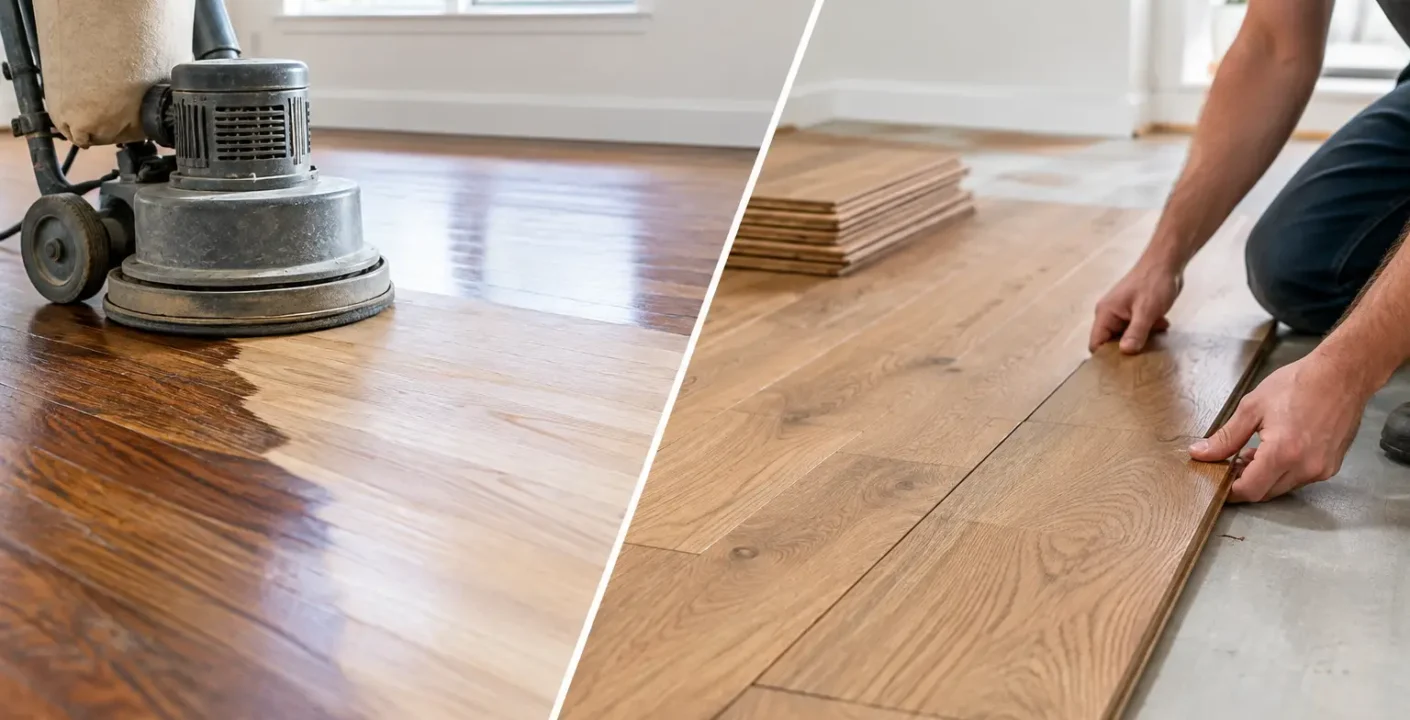
Refinishing is the process of sanding down the existing wood surface, addressing minor imperfections, and applying a new stain and protective finish. It is often an excellent option when the hardwood itself is structurally sound but the finish is worn, scratched, faded, or dated.
A floor is usually a strong candidate for refinishing when the boards are stable, the damage is limited to the surface, and there is enough wood remaining above the tongue-and-groove joint for safe sanding. Solid hardwood floors can often be refinished more than once, although the exact number depends on the species, original board thickness, and prior refinishing work.
Refinishing can also make sense when homeowners like their current floor layout but want a different look. A lighter natural finish can brighten a traditional interior, while a medium or darker stain may better coordinate with updated cabinetry, paint, or furniture. Even a clear protective coat can bring back warmth and depth without changing the wood color.
The financial advantage is real, but it should not be the only reason to refinish. Restoring a quality existing wood floor preserves authentic materials and avoids the disruption of removing flooring, modifying transitions, and potentially adjusting baseboards. In many homes, it is the most efficient path to a meaningful visual improvement.
Damage Refinishing Can Often Correct
Surface scratches, worn finish near exterior doors, small stains, minor dents, and uneven color from sun exposure can often be improved through refinishing. A professional can also fill small gaps or repair isolated boards before applying the final finish.
However, refinishing is not a cure for every issue. Deep pet stains that have penetrated the wood may remain visible even after sanding. Severe water damage, active moisture problems, and boards that have warped or loosened require a different level of repair. Sanding a floor with underlying problems may make it look better briefly, but it will not make the structure sound.
When Replacing Hardwood Floors Is the Better Choice
Replacement becomes the better option when the existing floor cannot be restored reliably or when the homeowner’s goals go beyond the surface. This is especially common in homes with extensive water damage, significant movement between boards, repeated repairs, or flooring that has already been sanded close to its limit.
Engineered hardwood deserves special attention. Some engineered products have a thick enough wear layer to be refinished once, but others do not. If the top veneer is too thin, aggressive sanding can expose the layers beneath it. A flooring professional should identify the product before recommending refinishing.
Replacement also makes sense when you want to change the width, direction, species, or continuity of the floor. For example, homeowners updating a closed-off layout may remove walls and want one consistent flooring material across the newly connected living spaces. Trying to patch an older floor into a larger footprint can produce noticeable differences in color, grain, board width, and height.
If damaged boards are scattered throughout several rooms, replacing the flooring may provide a cleaner and more durable result than a long series of patches. The same is true when a floor has been repaired with mismatched materials over many years. A new installation gives you a consistent starting point and lets you select a product that fits the household’s current needs, whether that means wider planks, a more durable finish, or better moisture resistance.
Signs That Replacement Should Be Considered
Replacement is worth serious consideration if you see cupping, crowning, buckling, soft spots, black water stains over large areas, or gaps that repeatedly open and close. These signs may point to moisture intrusion, subfloor concerns, or movement that refinishing cannot solve.
Before choosing new flooring, identify the source of any moisture problem. A plumbing leak, poor drainage, appliance failure, or humidity issue must be corrected first. Installing beautiful new hardwood over an unresolved condition only puts the new investment at risk.
Refinishing Versus Replacing Hardwood Floors: Cost and Disruption
Refinishing typically costs less than full replacement because it uses the existing flooring and requires less demolition. It can also be faster, particularly when the floor is in good condition and the scope is limited to a few rooms. Still, homeowners should plan for dust control, furniture removal, noise, and time away from the work area while the finish cures.
Replacement costs more because it can involve removing the old floor, preparing or repairing the subfloor, purchasing new materials, installing them, and completing trim or transition work. If the project affects several rooms, it may also require changes where the wood meets tile, carpet, cabinets, or doors.
The less expensive choice is not always the better value. Refinishing a floor that is nearing the end of its usable life can create another project sooner than expected. On the other hand, replacing solid hardwood that only has cosmetic wear can spend money that could have gone toward a kitchen, bathroom, or other improvement.
A dependable estimate should separate necessary repairs from optional upgrades. It should also account for the practical details that are easy to overlook, including furniture moving, baseboard work, subfloor preparation, stain selection, and the transition to adjacent flooring. Clear communication at this stage helps prevent surprises once the project begins.
Consider Your Home’s Long-Term Plan
The best flooring decision often becomes clearer when you look beyond the floor itself. Are you preparing to sell in the next few years, renovating one room at a time, or planning to stay in the home long term? Are you updating cabinetry and paint, opening up a living area, or trying to preserve original character?
For a homeowner preparing a property for the market, professionally refinished hardwood can be a strong selling feature when the floor is fundamentally sound. Buyers often respond well to real wood floors that look clean and well maintained. For a larger renovation, replacement may create better consistency across the home and support the new design more effectively.
North Texas homes also benefit from practical product selection. Temperature shifts, active households, pets, and frequent entertaining can all influence the best finish and wood choice. A harder species may resist dents better, while a high-quality finish can make routine cleaning and maintenance easier. No floor is indestructible, but the right materials can reduce frustration over time.
How to Make the Right Call Before Work Begins
Start with an in-person evaluation rather than choosing based on appearance alone. A contractor should inspect the thickness and condition of the flooring, check for signs of moisture, look at the subfloor where possible, and discuss whether matching existing materials is realistic. Photos can be useful for an initial conversation, but they cannot reveal everything that matters.
It also helps to bring samples of planned paint colors, cabinetry, tile, or countertops into the discussion. Flooring has a large visual footprint, and stain colors often look different under the natural light in your home than they do on a small sample board.
At Oak Custom Remodeling, flooring decisions are approached as part of the home’s overall function and finish, not as an isolated repair. That perspective is especially helpful when a flooring project connects to a kitchen update, painting plan, or broader remodel.
A floor that has carried a family through years of daily life deserves an honest recommendation, not a one-size-fits-all answer. Have the condition assessed, address any moisture concerns first, and choose the option that will serve your home well after the fresh finish or new boards are in place.