
A countertop can make a new kitchen feel complete, but it also has to handle the daily reality of family meals, dropped pans, homework, hot serving dishes, and frequent cleanup. The best kitchen countertops for a North Texas home are not always the most expensive option. They are the surfaces that fit how you cook, how much maintenance you want to take on, and the long-term goals for your home.
For homeowners in Sachse, Dallas, Garland, Fort Worth, and nearby communities, countertop selection is often one of the biggest decisions in a kitchen remodel. It affects the appearance of cabinetry, backsplash, sinks, lighting, and flooring. More practically, it can influence your remodeling budget and how well the kitchen performs for years after the work is done.
Start With How Your Kitchen Is Used
Before comparing stone samples or colors, consider the demands your countertop will face. A kitchen used for quick weekday dinners has different needs than one where large family gatherings, baking projects, and frequent entertaining are common. Households with young children may prioritize stain resistance and easy cleaning. Homeowners who enjoy cooking may place more value on heat resistance and a durable work surface near the range.
Your design goals matter, too. A quiet, neutral countertop can balance detailed cabinetry or a patterned backsplash. A bolder natural stone may become the focal point in a kitchen with simple shaker cabinets. The right choice should support the entire room rather than compete with every other finish.
Budget deserves an honest conversation early in the planning process. Countertop costs involve more than the slab or material itself. Fabrication, edge profiles, cutouts for the sink and cooktop, demolition of existing surfaces, plumbing disconnection and reconnection, and installation all affect the final investment. A clear scope helps prevent surprises after a material has already been selected.
Popular Kitchen Countertops and Their Trade-Offs
Quartz: Consistent and Low Maintenance
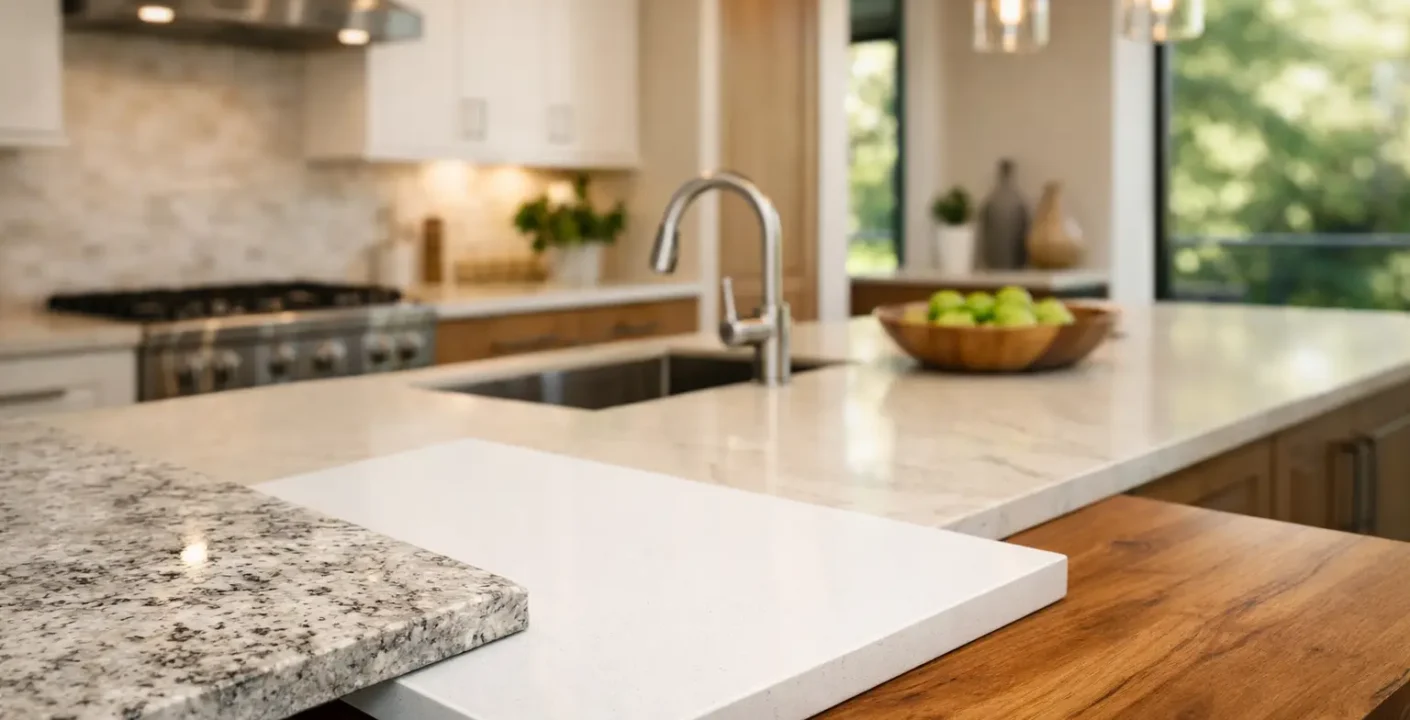
Quartz remains a popular choice for remodeled kitchens because it offers a polished appearance with dependable everyday performance. It is an engineered material made from natural quartz particles and resin, available in a wide range of colors and patterns. Some options have a clean, uniform look, while others recreate the veining associated with marble or natural stone.
For busy households, quartz is appealing because it does not require routine sealing. It resists stains well and is easy to clean with mild soap and water. That can be especially useful around a frequently used island, coffee station, or family breakfast area.
The trade-off is heat. Quartz is durable, but extreme heat can damage the resin, so hot cookware should not be placed directly on the surface. It can also be a significant investment, particularly for premium designs with dramatic veining. Still, for homeowners who want a refined look without ongoing stone maintenance, quartz is often a practical fit.
Granite: Natural Character and Strong Performance
Granite brings one-of-a-kind variation that cannot be duplicated by manufactured materials. Each slab has its own movement, mineral patterns, and color range. That individuality works well in kitchens where homeowners want warmth and visual depth.
A properly sealed granite countertop handles heat well and stands up to normal kitchen use. It is a strong choice for people who cook often and appreciate natural materials. Granite does need periodic sealing, however, and the timing depends on the specific stone and the sealant used. Some lighter or more porous selections may need more attention than others.
Because granite slabs vary, visiting the fabricator to view the actual material can be worthwhile. A small sample may not show the full pattern or color shifts that will appear across a large island. Planning the slab layout also helps ensure that dramatic veining or movement is placed where it will look intentional.
Marble: Beautiful but Demanding
Marble has a classic appeal, especially in traditional, transitional, and European-inspired kitchens. Its soft veining and natural brightness can make a room feel elevated without looking overly formal. For many homeowners, no imitation completely replaces the character of genuine marble.
That beauty comes with a higher level of care. Marble can etch when exposed to acidic foods and drinks, including lemon juice, vinegar, and wine. It can also stain if spills are not addressed promptly. Etching is not always a defect. It is part of how a natural marble surface ages, but it can be frustrating for homeowners who expect it to look unchanged over time.
Marble can work well for a baking station, a lower-use section of the kitchen, or a homeowner who appreciates a lived-in patina. It is less ideal when the priority is a worry-free surface for a heavily used family kitchen.
Porcelain: Durable, Thin, and Design-Forward
Porcelain slabs have become more common in modern kitchen remodeling. They can offer the look of natural stone, concrete, or other materials while providing excellent resistance to heat, scratches, and stains. Their thin profile can create a crisp, contemporary edge, and the same material may be used for a backsplash for a coordinated appearance.
Installation is specialized. Porcelain can be highly durable once installed, but fabricating cutouts and handling slabs requires experienced professionals. Edge details are different from thick natural stone, and not every design or application is appropriate for every kitchen. Homeowners drawn to porcelain should review full-size samples and discuss how edges, seams, and sink cutouts will be finished.
Solid Surface and Laminate: Value-Focused Options
Solid surface materials offer a smooth, nonporous look with inconspicuous seams and integrated sink possibilities. They are easy to maintain and can be repaired if minor scratches or damage occur. They do not offer the same heat resistance as stone, but they can be a sensible choice for laundry rooms, secondary kitchens, or homeowners seeking a clean look within a controlled budget.
Modern laminate has also improved significantly. It comes in designs that resemble stone, wood, and concrete at a lower initial cost. Laminate is not as resistant to cuts, heat, or moisture at seams as quartz or stone, but it can be the right solution for a rental property, a budget-conscious refresh, or a kitchen that may be remodeled more extensively later.
Details That Change the Final Result
Material choice is only part of the decision. A countertop’s edge profile changes its appearance and cost. A simple eased edge is clean and versatile, while more elaborate profiles can add a traditional look and increase fabrication labor. Thickness matters as well. A thicker-looking edge can make an island feel substantial, though it may require additional material or a built-up detail.
Sink selection should be coordinated with the countertop early. Undermount sinks create a clean transition and make it easy to wipe crumbs directly into the basin. Farmhouse sinks create a strong design statement but may require cabinet modifications and careful support. The faucet location, soap dispenser, air switch, and filtered-water fixture all need planned cutouts before fabrication.
Seams are another realistic consideration. Large kitchens, long runs, and oversized islands may require them, depending on slab size and material. A skilled fabricator places seams thoughtfully, but no countertop installation is entirely free of practical limitations. Asking where seams will be located before fabrication gives you a clearer picture of the finished kitchen.
Make the Countertop Work With the Whole Remodel
Countertops are often selected after cabinets, but the strongest kitchens are planned as a complete system. Cabinet color affects whether a countertop reads warm or cool. Backsplash tile can either calm a busy slab or add texture to a simple surface. Lighting changes how veining, sparkle, and undertones appear from morning to evening.
Bring samples together whenever possible. Set cabinet, flooring, backsplash, and paint samples beside the countertop selection in natural light. What looks bright white under showroom lighting may appear cream, gray, or blue next to your chosen cabinetry at home. This small step prevents costly second-guessing.
A dependable remodeling team can also help you weigh the decisions that do not show up on a sample board: appliance clearances, overhang support, island seating, outlet placement, and the timing needed to template and install the slabs. Oak Custom Remodeling helps homeowners plan these connected details so the finished kitchen is as functional as it is attractive.
The right countertop should make daily life easier, not create another item to worry about. Choose a surface you will be comfortable using, cleaning, and enjoying for years, then give it the installation and planning it deserves.