
A roof can look acceptable from the driveway and still be nearing the end of its useful life. In North Texas, roofing material lifespan is shaped by more than a manufacturer’s label. Intense sun, sudden hailstorms, high winds, heat buildup in the attic, and the quality of the original installation all affect when a roof needs attention.
For homeowners in Sachse, Dallas, Fort Worth, Garland, and nearby communities, choosing a roof is a long-term property decision. The right material can protect your home, support resale value, and reduce surprise repair costs. The best choice is not always the material with the longest advertised life. It is the one that fits your home, budget, neighborhood expectations, and tolerance for maintenance.
Roofing Material Lifespan at a Glance
The ranges below are realistic planning estimates for properly installed residential roofs. They are not guarantees. A severe hail event can shorten the service life of almost any roof, while prompt repairs and good ventilation can help a roof perform closer to its expected range.
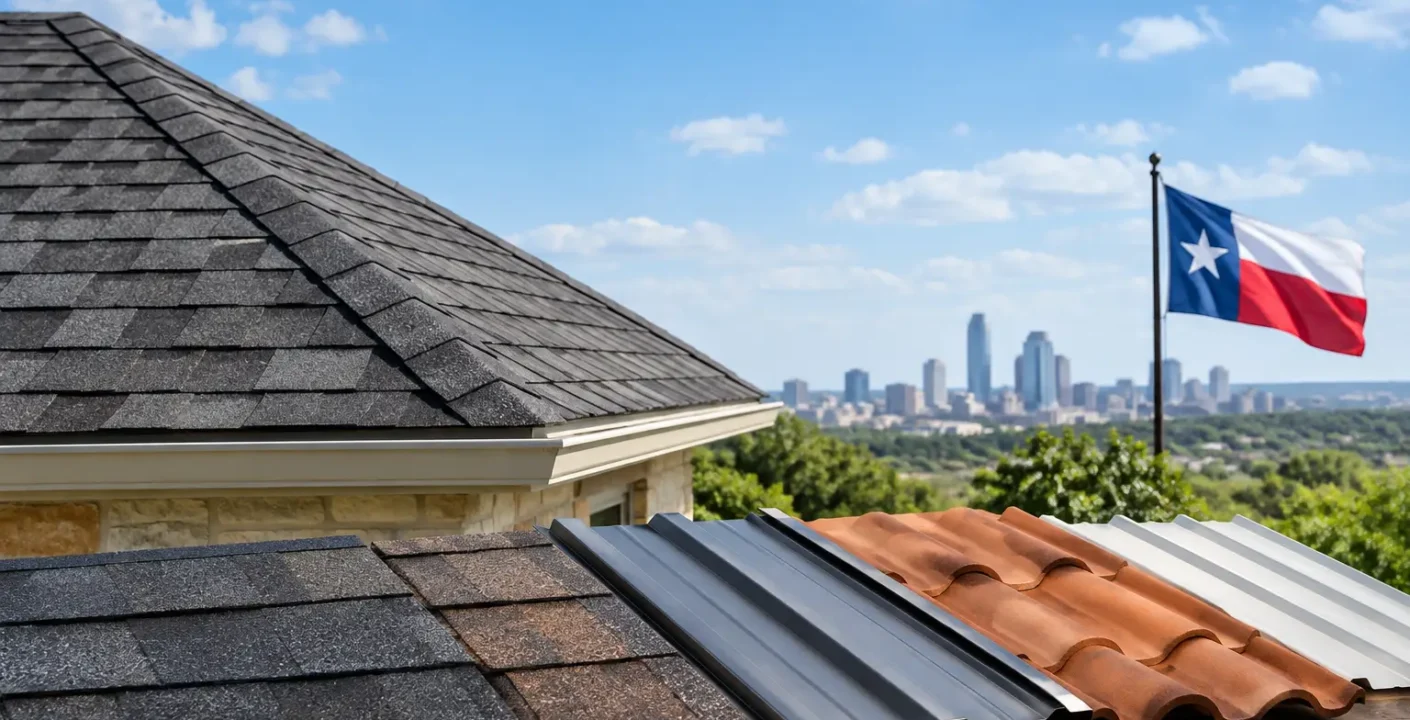
| Roofing material | Typical service life | Best fit for | |—|—:|—| | Three-tab asphalt shingles | 15-20 years | Budget-conscious replacements | | Architectural asphalt shingles | 20-30 years | Most North Texas homes | | Impact-resistant asphalt shingles | 25-35 years | Areas with frequent hail exposure | | Standing-seam metal | 40-70 years | Long-term owners seeking durability | | Concrete or clay tile | 50+ years | Homes designed to support the weight | | Slate | 75+ years | Specialty, high-end applications |
These figures describe the roofing material itself, not necessarily every component beneath it. For example, tile can last for decades, but the underlayment below the tile may require replacement sooner. That distinction matters when evaluating the condition and future cost of a tile roof.
Why North Texas Changes Roofing Material Lifespan
A roof in a mild climate does not age the same way as a roof in North Texas. Long stretches of direct sun heat shingles and metal surfaces to temperatures far above the outdoor air temperature. Day-to-night temperature swings cause roofing components to expand and contract repeatedly, which can gradually weaken seals, flashing, and fasteners.
Hail is another major factor. Not every impact leaves an obvious hole or missing shingle. Hail can bruise asphalt shingles, knock away protective granules, crack tile, or damage soft metal components. The roof may still shed water for a while, but the affected material can become more vulnerable to leaks and accelerated wear.
Wind-driven rain also tests the details that homeowners rarely see from the ground. Ridge caps, pipe boots, chimney flashing, valleys, and transitions between roof sections need to be installed carefully. A durable shingle will not compensate for poorly protected penetrations or inadequate flashing.
Choosing a Material for Your Home
Asphalt shingles remain the practical standard
Architectural asphalt shingles are the most common choice for good reason. They offer a balanced combination of cost, appearance, installation flexibility, and dependable performance. For many homeowners, a quality architectural shingle roof is the most sensible investment, particularly when the home may be sold within the next 10 to 20 years.
Three-tab shingles usually cost less upfront, but their shorter expected lifespan and flatter appearance make them less appealing for many replacement projects. If the price difference is manageable, architectural shingles often provide better long-term value.
Impact-resistant shingles deserve consideration in hail-prone areas. They are designed to better withstand impacts than standard shingles, though no roof is immune to storm damage. Their higher initial cost may be worthwhile for homeowners who plan to stay put, want additional confidence during storm season, or are comparing insurance options.
Metal roofing offers durability, with a higher entry cost
A standing-seam metal roof can be an excellent long-term option. It resists rot, sheds water efficiently, and can perform well through strong sun and wind when installed correctly. Its clean appearance also works well on many contemporary, ranch, and farmhouse-style homes.
The trade-off is cost. Metal roofing requires a larger initial investment than asphalt, and installation quality is especially important. Panel layout, flashing details, fastener systems, and expansion allowances all influence performance. A lower bid is not a bargain if the installer lacks experience with the specific metal system being used.
Metal roofs can also be dented by very large hail. They may continue protecting the home despite cosmetic damage, but that distinction should be discussed before choosing the material. Some homeowners are comfortable with the possibility of visible dents; others prefer a material that better preserves its original appearance after a storm.
Tile has impressive longevity but requires the right structure
Concrete and clay tile can last for generations and create a distinctive, high-end appearance. Tile does not decay in the same way asphalt does, but it is heavy. The home’s framing must be able to support the roofing system, and broken tiles need to be replaced promptly to protect the underlayment.
Homeowners should also understand that a tile roof is not maintenance-free. Foot traffic can crack tiles, and repairs require a contractor who knows how to work on the system without creating additional damage. Tile can be a strong investment for the right house, but it is not a simple swap for an existing asphalt roof.
Installation Often Matters More Than the Label
When comparing roofing material lifespan, homeowners understandably focus on the product. The installation deserves equal attention. Even premium materials can fail early if the roof deck has damaged areas, ventilation is inadequate, or flashing is installed carelessly.
A professional roofing project should account for the condition of the decking, the roof’s slope, attic airflow, drainage patterns, penetrations, and existing damage. Proper ventilation helps manage heat and moisture in the attic. It does not eliminate Texas heat, but it can reduce excessive stress on roofing materials and support more consistent performance.
The details around chimneys, skylights, valleys, vents, and wall intersections are particularly important. These are common leak locations because they interrupt the broad, simple surface of the roof. Quality workmanship is often most visible in the details homeowners may never notice unless something goes wrong.
Signs Your Roof May Be Nearing Replacement
Age alone does not always determine whether replacement is necessary, but it is a meaningful starting point. If an asphalt roof is approaching 20 years old, it is wise to have it evaluated, especially after major storms.
Look for curling or cracked shingles, widespread granule loss, exposed fiberglass mat, missing tabs, damaged ridge caps, rusted flashing, or recurring leaks. Dark streaks may be cosmetic algae growth, but they can also make it harder to see broader deterioration. Inside the home, water stains on ceilings, peeling paint near rooflines, or damp attic insulation call for prompt investigation.
A few damaged shingles do not automatically mean you need a new roof. Localized damage may be repairable if the surrounding roof remains in sound condition and matching materials are available. Replacement becomes more practical when problems are widespread, repairs are becoming frequent, or the roof has reached the later portion of its expected service life.
Plan Before Storm Season Forces the Decision
Waiting for an active leak or a damaging hailstorm can turn a planned investment into an urgent expense. A periodic roof inspection gives homeowners time to understand the current condition, budget for future work, and compare material options without pressure.
If you are also planning exterior painting, gutters, attic improvements, or a broader remodel, coordinate the timing. Roofing work can affect these projects, and a clear sequence helps prevent duplicated work or avoidable repairs. Oak Custom Remodeling helps North Texas homeowners evaluate home improvements with practical priorities in mind, including the work that protects everything underneath.
A roof does not need to be the most expensive material available to be a smart investment. It needs to be well suited to your home, installed with care, and checked before small weather-related issues become expensive interior damage.