
A shower can look impressive on a showroom wall and still be the wrong choice for your home. The tile may be hard to clean, too slippery underfoot, or simply out of scale once it is installed in a smaller bathroom. Knowing how to choose shower tile means looking past color and considering how the material, layout, grout, and installation will perform every day.
For homeowners planning a bathroom remodel in Sachse or the Dallas-Fort Worth area, the best choice is usually one that fits the room, supports your routine, and protects the investment you are making in your home.
Start With the Shower’s Most Important Job
Shower tile has to handle constant moisture, temperature changes, soaps, shampoos, and regular cleaning. That makes performance the first decision, not an afterthought. Tile is the visible finish, but it is not the waterproofing system. A properly built shower needs a dependable waterproof layer behind or beneath the tile, along with correctly prepared walls, a sloped shower floor, and careful work around corners, niches, and fixtures.
This matters because even high-quality porcelain tile cannot make up for poor installation. Water can pass through grout joints over time. When the shower assembly behind the tile is not properly protected, homeowners can face loose tile, staining, mold concerns, or damage to adjacent rooms.
Choose a remodeling contractor who treats tile selection and shower construction as connected decisions. The final appearance matters, but a shower should be built to stay sound long after the new finish has lost its showroom shine.
Choose the Right Tile Material
Most shower tile decisions come down to porcelain, ceramic, natural stone, or glass. Each can work well in the right application, but they require different expectations for cost, maintenance, and installation.
Porcelain is the practical all-around choice
Porcelain is dense, low-absorption, durable, and available in an enormous range of colors, shapes, and realistic stone or wood looks. It is often the strongest choice for shower walls and floors because it handles water well and is generally easy to maintain. For a busy family bathroom, porcelain offers a good balance of appearance and long-term practicality.
A porcelain tile that resembles marble can create a refined look without the sealing requirements and higher maintenance associated with real marble. Quality varies, however, so review samples closely. A printed pattern may look convincing from a distance but repetitive in a full shower.
Ceramic works well on shower walls
Ceramic tile is typically more affordable than porcelain and offers plenty of design flexibility. It is a solid option for shower walls, especially when the goal is a clean subway tile, decorative accent, or simple color statement. For shower floors, porcelain is usually the safer recommendation because of its density and durability.
Natural stone adds character, with more upkeep
Marble, travertine, slate, and other natural stones bring depth and variation that manufactured tile cannot fully duplicate. They can be beautiful in a primary bathroom, but they need sealing and more thoughtful maintenance. Some stones are more sensitive to acidic or harsh cleaners, and their natural variation means samples may not show the exact range you will receive.
Natural stone is best for homeowners who appreciate its lived-in character and are comfortable with its care requirements. It is not automatically the best choice for a low-maintenance household.
Glass is best used selectively
Glass tile reflects light and can make a shower feel brighter. It is especially effective in a niche, a narrow accent band, or a small feature area. Full glass installations can cost more and may show water spots, so it is often more practical as a design detail rather than the main shower surface.
How to Choose Shower Tile Size and Layout
Tile size affects more than style. It changes the number of grout joints, the way a shower feels, and how easily the installer can shape the material around slopes and fixtures.
Large-format tile creates a clean, modern appearance with fewer grout lines. It can make a modest shower feel more open, particularly on the walls. However, large tiles demand very flat walls and precise installation. In a shower with many corners, windows, niches, or out-of-square conditions, a large format can create more cuts and waste.
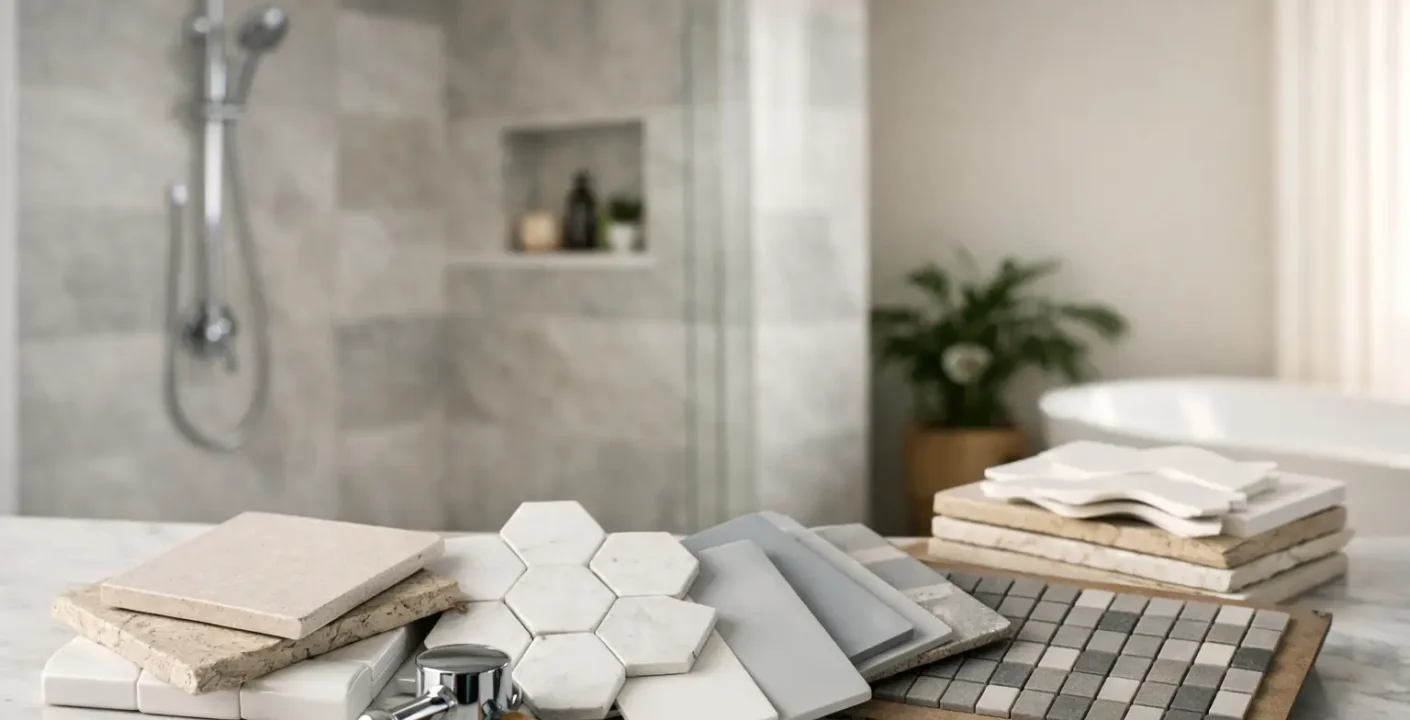
Smaller tile is often the better fit for shower floors. Mosaic sheets, commonly made of two-inch or smaller pieces, follow the slope toward the drain more easily than large tiles. Their additional grout joints also provide helpful traction. That is a practical advantage in a wet area where safety matters.
For many bathrooms, a balanced approach works best: larger tile on the walls, smaller mosaic tile on the floor, and a coordinating tile in the niche. Keeping the palette connected without using the same tile everywhere creates interest while avoiding a crowded look.
Prioritize Slip Resistance on the Shower Floor
A smooth, polished tile may look elegant, but it is rarely the right choice for a shower floor. Water, soap residue, and bare feet are not forgiving. Look for a tile with a matte, textured, or otherwise slip-resistant finish intended for wet floor use.
Ask to see the actual tile, not just a catalog image. Touch the surface and compare it with the wall tile you are considering. A floor tile should feel secure without being so deeply textured that it becomes difficult to clean.
If accessibility is a concern, the floor selection becomes even more important. Smaller mosaics, a well-designed slope to the drain, appropriate grab bar planning, and a curb-free or low-threshold entry can all support a safer shower. These choices should be discussed early because they affect framing, plumbing, and layout.
Think About Grout Before You Fall in Love With a Tile
Grout color and joint size have a major effect on the finished shower. White grout paired with white tile gives a classic, light appearance, but it may need more frequent cleaning in high-use bathrooms. A soft gray or warm neutral grout can be more forgiving while still keeping the overall design bright.
Contrasting grout makes each tile stand out. It can be a good fit for a traditional subway tile pattern or a graphic, modern look, but it also draws attention to every line and every installation detail. For a quieter finish, choose grout close to the tile color.
Many homeowners prefer stain-resistant grout options because they simplify maintenance. The right product depends on the tile, joint width, and project budget, so it is worth reviewing with your remodeler rather than choosing by color alone. Avoid selecting an extremely narrow grout joint just for appearance if the tile has natural size variation or uneven edges. The installation needs enough room to look consistent and perform properly.
Match the Tile to the Bathroom, Not Just the Trend
A tile trend can be useful inspiration, but it should not dictate every decision. Consider the bathroom’s lighting, the amount of natural light, ceiling height, vanity finish, and the style of the rest of your home. A dramatic dark tile may feel sophisticated in a large, well-lit primary bath but can make a small hall bathroom feel enclosed.
In many North Texas homes, warm whites, soft greiges, muted greens, and stone-inspired porcelain create a look that remains appealing over time. That does not mean every shower should be neutral. A patterned floor, a vertical stacked wall tile, or a richly colored niche can add personality without making the entire room difficult to update later.
Bring home samples whenever possible. View them next to the vanity, countertop, paint color, and flooring under morning, afternoon, and artificial light. The undertones that are hard to see in a store often become obvious at home.
Set a Budget That Includes the Whole Shower
Tile pricing is only one part of the cost. A less expensive tile with complicated cuts, a herringbone layout, or a detailed mosaic border may require more labor than a higher-priced tile installed in a straightforward pattern. Large-format tile, natural stone, specialty trim pieces, and glass accents can also affect the total.
A realistic shower budget should account for demolition, waterproofing, substrate preparation, plumbing changes, tile, grout, trim, and labor. If you need to prioritize, invest first in the shower structure and skilled installation. You can often achieve a high-end result with a simpler porcelain tile and thoughtful layout rather than spending the entire budget on a premium material.
Make the Final Decision With Confidence
Before ordering, confirm that the selected tile is rated for its intended use, especially on the shower floor. Check lead times and order enough material to allow for cuts, waste, and a few future repairs. Tile lots can vary, so it is wise to purchase the full amount together.
Oak Custom Remodeling helps homeowners make these choices in the context of the entire bathroom, not as isolated design decisions. A tile that looks right, feels safe, cleans up well, and is installed over a properly prepared shower gives you more than a new finish. It gives you a bathroom you can enjoy with confidence for years to come.