
A backsplash may cover a relatively small portion of your kitchen, but it has an outsized effect on the room’s finished appearance, cleanup, and resale appeal. The best kitchen backsplash options are not always the trendiest ones. For most North Texas homeowners, the right choice balances the kitchen’s style, daily cooking habits, countertop selection, budget, and the amount of maintenance they are willing to take on.
A backsplash also needs to work with the rest of the remodel. Cabinets, countertops, lighting, outlets, and range hoods all influence where tile begins and ends, how patterns align, and whether the final installation looks intentional. Choosing the material early helps avoid expensive changes once construction is underway.
How to Choose the Best Kitchen Backsplash Options
Start by looking at the surfaces that are harder and more costly to change. Countertops and cabinetry generally come first because they set the color direction and visual weight of the room. A busy granite countertop, for example, often looks better with a simple backsplash. If the counters are a quiet white or soft gray quartz, the backsplash can take on more texture, color, or pattern.
Function matters just as much as appearance. Homes where meals are cooked often need a material that stands up to grease, splatter, and regular cleaning behind the range. A homeowner who wants minimal upkeep may prefer large-format porcelain or a full-height quartz slab over small mosaic tile with many grout lines.
It is also worth considering how long you plan to own the home. A bold, highly personal design can be a good fit for a forever home. If resale is a priority in Sachse, Garland, or elsewhere in the Dallas-Fort Worth area, a classic material installed with care usually has the broadest appeal.
Ceramic and Porcelain Tile: The Most Flexible Choice
Ceramic and porcelain tile remain among the most practical backsplash materials for a reason. They are available in a wide range of colors, sizes, finishes, and price points, making it possible to create anything from a traditional kitchen to a clean contemporary space.
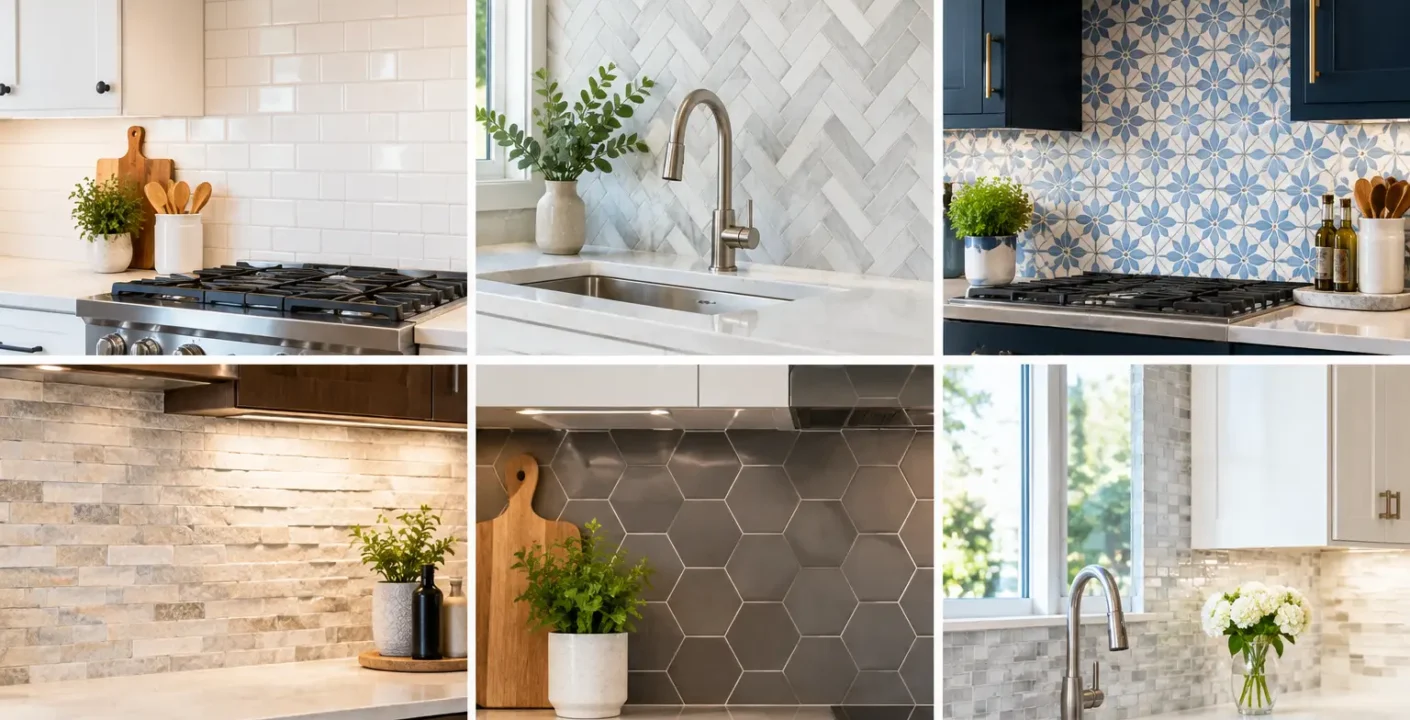
Subway tile continues to be a reliable choice, especially in white, cream, soft gray, or muted green. It is familiar without feeling dated when installed with thoughtful details, such as a vertical stack, herringbone accent behind the range, or slightly larger tile size. A simple layout also allows cabinet hardware, pendant lighting, or a statement range hood to stand out.
Porcelain is especially durable and less porous than many ceramic products. Both can handle kitchen splatters well, but porcelain may be the better fit for homeowners who want a denser, low-maintenance surface. The main consideration is grout. Narrow grout joints and a stain-resistant grout can reduce maintenance, but no tiled backsplash is completely grout-free.
Quartz Slab Backsplashes for a Clean, High-End Look
Using the same quartz from the countertop as a full-height backsplash creates a polished, cohesive look. Rather than stopping the material at a short strip below the cabinets, the slab can extend all the way to the upper cabinets or range hood. This approach is particularly effective in modern kitchens and in kitchens with heavily veined quartz, where the pattern can become a focal point.
The practical benefit is easy cleanup. With no grout joints across most of the wall, a quartz slab backsplash is simple to wipe down after cooking. It can also make a smaller kitchen feel more open because the continuous material reduces visual breaks.
The trade-off is cost. Slab fabrication and installation require careful measurements, especially around outlets, windows, and cabinet returns. Quartz is also not indestructible. While it performs well for a backsplash, homeowners should avoid placing intense direct heat too close to it without proper clearance and protection. For a kitchen renovation with a refined, low-maintenance goal, however, quartz is one of the strongest options available.
Natural Stone Adds Character, With More Care Required
Marble, travertine, limestone, and slate offer natural variation that manufactured materials cannot fully duplicate. A honed marble backsplash can give a kitchen a timeless, tailored appearance, while textured travertine may suit a more traditional or warm transitional design.
Natural stone requires an informed decision. Some stones are porous and should be sealed, and lighter materials may show discoloration or staining more easily over time. Acidic cleaners can also damage certain stone finishes. This does not mean stone is a poor choice. It means homeowners should choose it because they appreciate its character and are comfortable with the care it requires.
For many kitchens, stone works best when paired with quieter countertops and cabinets. Too many competing patterns can make the space feel crowded. A professional installer can also help determine whether a stone’s thickness, edges, and layout will work cleanly around outlets and under cabinetry.
Glass and Metal Tile for Targeted Visual Interest
Glass tile reflects light, which can brighten a kitchen with limited natural light. It is often used in mosaics, but larger glass tiles can create a more current look with fewer grout lines. Glass is nonporous and easy to clean, although it can show fingerprints and may require careful installation because adhesive can be visible through translucent pieces.
Metal backsplashes, including stainless steel, brushed metal, and metal-look tile, are another option for homeowners who prefer an industrial or professional-kitchen feel. Stainless steel behind a range is especially practical because it handles heat and wipes clean easily. It tends to look best when it connects to other finishes in the kitchen, such as stainless appliances, cabinet hardware, or a vent hood.
These materials are generally better as deliberate design choices than as default selections. A full wall of reflective glass or metal can feel cold in some homes, particularly when paired with gray cabinets and cool lighting. Adding warm wood tones, brass hardware, or a softer wall color can create better balance.
Mosaic Tile: Beautiful but Not Always the Easiest to Maintain
Mosaic backsplashes can introduce color, movement, and detail in a way large tile cannot. They work well behind a cooktop, in a coffee bar, or as an accent area where homeowners want the eye to land. Marble mosaics, geometric porcelain mosaics, and handmade-look tiles all offer distinct personality.
The drawback is the number of grout lines. More joints mean more areas where cooking residue can collect, especially behind a gas range. Small tiles also require more installation time and more precise cuts. If you love the look of mosaic, consider limiting it to a focal area and using a simpler coordinating tile elsewhere. That approach can control cost while keeping the design from becoming visually busy.
Full-Height Backsplashes Make a Bigger Design Statement
A traditional backsplash often stops at the bottom of the upper cabinets. A full-height backsplash extends higher, sometimes all the way to the ceiling around a range hood or across an open wall. This detail can make a remodel feel more custom, especially in kitchens with open shelving, floating shelves, or fewer upper cabinets.
Full-height tile is a strong opportunity to use a subtle pattern or handmade texture. It can also provide a finished look around a prominent hood. The key is scale. A large-format tile may suit a wide wall and modern cabinets, while smaller tile can bring texture to a compact cooking area. The right layout should be planned before installation so cuts are balanced and pattern lines do not end awkwardly around cabinets or outlets.
Details That Affect the Finished Result
The material is only part of the decision. Grout color can make the same white tile look crisp and graphic or soft and understated. Matching grout minimizes the tile pattern, while contrasting grout emphasizes it. For resale-minded homeowners, a moderate grout contrast is often easier to live with than a stark, high-contrast grid.
Tile edge treatment matters, too. Finished trim pieces, clean transitions into painted walls, and properly aligned outlet covers separate a professional installation from a rushed one. In older homes, walls may not be perfectly straight, which is another reason experienced layout and preparation are essential.
Avoid choosing a backsplash from a small sample alone. View it next to cabinet and countertop samples under your kitchen lighting. Colors can shift significantly between a showroom and a home, particularly under warm recessed lights or daylight from nearby windows.
The best backsplash is one that supports how you use your kitchen while giving the entire room a finished, lasting feel. Whether your project calls for dependable porcelain tile or a dramatic quartz slab, Oak Custom Remodeling can help you make the selection fit the broader plan, then install it with the attention to detail your home deserves.