
A laundry room floor has a tougher job than most homeowners give it credit for. It deals with dripping clothes, detergent spills, muddy shoes, pet messes, vibrating appliances, and the occasional hose leak. The best laundry room flooring is not simply the material that looks good beside new cabinets. It is the one that can handle moisture, hold up to daily traffic, and make a leak less likely to become an expensive repair.
For homeowners in Sachse and across the Dallas-Fort Worth area, the right choice also needs to work with the home’s style, budget, and long-term plans. A practical laundry room upgrade can make a small, hardworking space easier to clean while adding a finished feel that supports overall resale value.
What Laundry Room Flooring Needs to Handle
Laundry rooms are often compact, but they place unusual demands on a floor. A washing machine can leak slowly without anyone noticing. A utility sink can splash. High-efficiency machines can also create vibration if they are not properly leveled. Flooring needs to stay stable through all of it.
Water resistance is the first priority, but it is not the only one. Homeowners should also consider scratch resistance, ease of cleaning, comfort underfoot, and how well the material transitions into nearby rooms. In many North Texas homes, the laundry room sits near a garage entry, kitchen, mudroom, or hallway, so a flooring decision should feel intentional rather than disconnected from the rest of the home.
It also helps to separate “water-resistant” from “waterproof.” A water-resistant floor can tolerate routine splashes if they are cleaned promptly. A waterproof material is better equipped to resist damage from standing water, although water can still reach the subfloor through gaps, edges, or penetrations around appliances if installation details are overlooked.
Best Laundry Room Flooring Options
Porcelain or Ceramic Tile
Porcelain tile is one of the most dependable choices for a laundry room. It does not absorb water easily, resists staining, and stands up well to heavy appliances and frequent cleaning. Porcelain is denser than standard ceramic tile and is usually the better fit for a busy utility space, though both can perform well when properly installed.
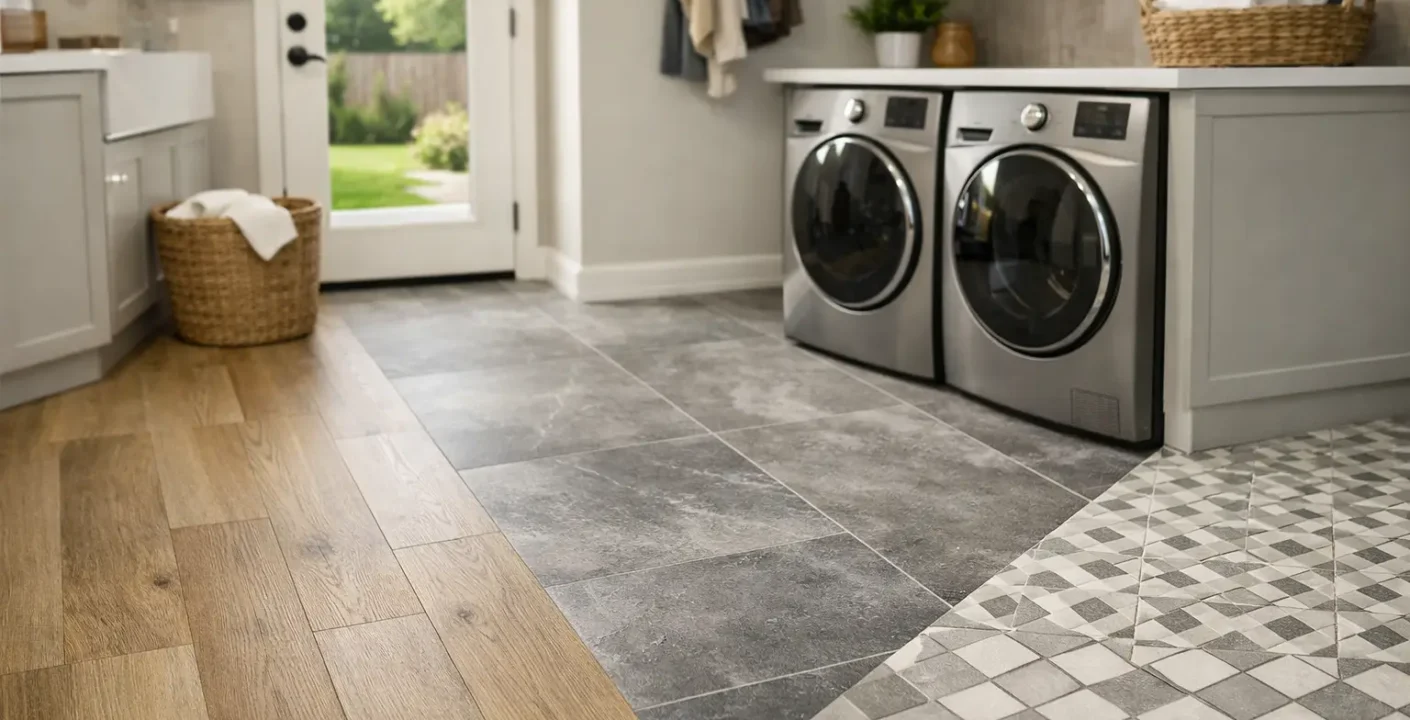
Tile also gives homeowners broad design flexibility. A large-format tile can create a clean, modern look with fewer grout lines, while patterned tile can add personality to an otherwise functional room. For a family home, a matte or lightly textured finish is often more forgiving than polished tile, which can show water spots and become slippery when wet.
The trade-off is comfort and cost. Tile can feel hard and cool underfoot, and professional installation matters. A poorly prepared subfloor or weak grout joints can lead to cracked tile over time. Still, for homeowners who want maximum moisture protection and a long service life, tile is difficult to beat.
Luxury Vinyl Plank and Luxury Vinyl Tile
Luxury vinyl plank, often called LVP, has become a popular flooring option for laundry rooms because it combines water resistance, durability, and a comfortable feel underfoot. It can closely resemble wood or stone while offering simpler maintenance than many natural materials.
Quality vinyl flooring works especially well when homeowners want the laundry room to coordinate with adjacent living areas. Wood-look LVP can create visual continuity with a hallway or kitchen without bringing real hardwood into a room where water exposure is a concern. Luxury vinyl tile offers a similar benefit for homeowners who prefer the look of stone or ceramic tile.
Not every vinyl product performs the same way. The thickness of the wear layer, locking system, and subfloor preparation all affect the finished result. Some floating floors can allow water to travel beneath the planks after a significant leak, which is why careful installation and prompt cleanup remain important. For many homes, though, LVP offers one of the best balances of appearance, comfort, and practical performance.
Sheet Vinyl
Sheet vinyl is not always the first choice for a design-focused remodel, but it deserves consideration. Because it can be installed with very few seams, sheet vinyl offers strong protection against everyday spills and can be an efficient solution for a laundry room with an irregular layout.
Modern sheet vinyl is available in more attractive patterns than many homeowners expect, including convincing stone and tile looks. It is also softer underfoot than tile and easy to maintain. Its primary limitation is that it may not offer the same upscale appearance or long-term repair flexibility as tile or premium vinyl plank. If a section is damaged, replacing the floor can be more involved than swapping out a single tile or plank.
Sealed Concrete
Sealed or coated concrete can be an excellent option in certain homes, particularly when the laundry room is on a slab foundation, in a garage-adjacent space, or part of a modern industrial design. It is durable, moisture tolerant, and easy to clean when finished with the right sealer or coating.
The key is preparation. Concrete can develop cracks, show moisture issues, and feel very hard underfoot. A professional evaluation helps determine whether the slab needs repair, leveling, or moisture mitigation before a finish is applied. Area rugs with non-slip backing can add comfort near the washer and dryer without sacrificing the floor’s practicality.
Flooring Materials to Approach Carefully
Solid hardwood is generally not a good choice for a laundry room. It brings warmth and value to living spaces, but water exposure can cause cupping, staining, and movement that may require costly repairs. Even a careful homeowner cannot always prevent an appliance failure.
Laminate flooring can be a budget-friendly option elsewhere in the home, but traditional laminate is vulnerable when water reaches its seams or core. Some newer products offer improved water resistance, yet they still require close attention to product specifications and installation details. If moisture protection is the priority, quality LVP, sheet vinyl, or tile is usually the safer investment.
Natural stone can look beautiful, but it is not automatically the best answer. Many stone products need regular sealing and may be more susceptible to staining or etching from household products. It can make sense in a high-end remodel where the homeowner is prepared for the maintenance, but it is not the most practical choice for every laundry room.
How to Choose the Right Floor for Your Home
Start with the risk level in your particular room. A first-floor laundry room over a slab may have different needs than an upstairs laundry closet above finished living space. For an upstairs room, waterproof materials, careful appliance connections, and attention to transitions become especially valuable because a leak can affect more than one level of the home.
Next, consider the scope of the remodel. If the room is receiving new cabinetry, a utility sink, improved lighting, or a better appliance layout, flooring should be selected early. It may need to be installed before cabinets, or it may require coordinated installation around existing units. Planning the work together helps avoid awkward cut lines and unnecessary rework.
Color and finish matter, too. Light floors can make a small laundry room feel more open, but very pale grout or highly polished surfaces may show dirt quickly. Mid-tone flooring with subtle variation often hides everyday dust and lint better. In homes with pets or children, that practical detail can make the room easier to live with.
Finally, do not overlook the condition of the subfloor. Even the best material can fail prematurely if the floor beneath it is uneven, weak, or affected by moisture. Proper preparation is not the exciting part of a remodel, but it is one of the clearest signs of quality workmanship.
Installation Details That Protect Your Investment
A well-installed floor includes more than the visible surface. Seams should be properly sealed where the product requires it, transitions should be secure, and the appliances should sit level to reduce vibration. If possible, consider a washing machine pan with a drain connection, especially in an upstairs laundry room or any location where water damage would be difficult to contain.
Baseboards and trim also deserve attention. In some projects, moisture-resistant trim materials or careful caulking at vulnerable edges can provide an added layer of protection while creating a clean finished appearance. These details are small, but they help a laundry room perform like a completed remodel rather than a collection of separate upgrades.
The right floor should make laundry less stressful, not give you another surface to worry about. Whether tile, luxury vinyl, or sheet vinyl is the best fit, choose a material that matches how your household actually uses the room, then rely on careful preparation and installation to protect the home around it. For homeowners planning a full laundry room update, Oak Custom Remodeling can help coordinate the flooring, cabinetry, and finishing details into one practical, well-executed project.