
A North Texas roof may face blazing summer heat, sudden hail, high winds, and rapid temperature changes in the same year. That is why choosing the best roofing materials Texas homeowners can rely on is about more than curb appeal. The right material needs to protect your home, fit your budget, work with your roof design, and hold up under the weather patterns common in Sachse, Dallas, Fort Worth, Garland, and surrounding communities.
For many homeowners, asphalt shingles remain the practical choice. For others, impact-resistant shingles, metal roofing, tile, or synthetic products can offer better long-term performance. The best fit depends on your priorities and the condition of the home beneath the roofline.
What a Texas Roof Has to Handle
Texas roofing decisions are not one-size-fits-all. In North Texas, hail is often the concern that gets homeowners’ attention, but heat, wind, moisture, and sun exposure also affect how a roof performs over time.
Summer temperatures can accelerate the aging of lower-quality shingles. Strong winds can lift improperly installed materials or expose vulnerable flashing. Hail can create bruising, cracks, or granule loss that may not be obvious from the ground. A material that performs well in a mild climate may not provide the same value here without quality installation and the right supporting components.
Your roof is a system, not simply a surface layer. Underlayment, flashing, ventilation, decking condition, ridge details, and installation practices all affect its service life. Even an excellent roofing product can underperform if those details are overlooked.
Best Roofing Materials for Texas Weather
Architectural Asphalt Shingles
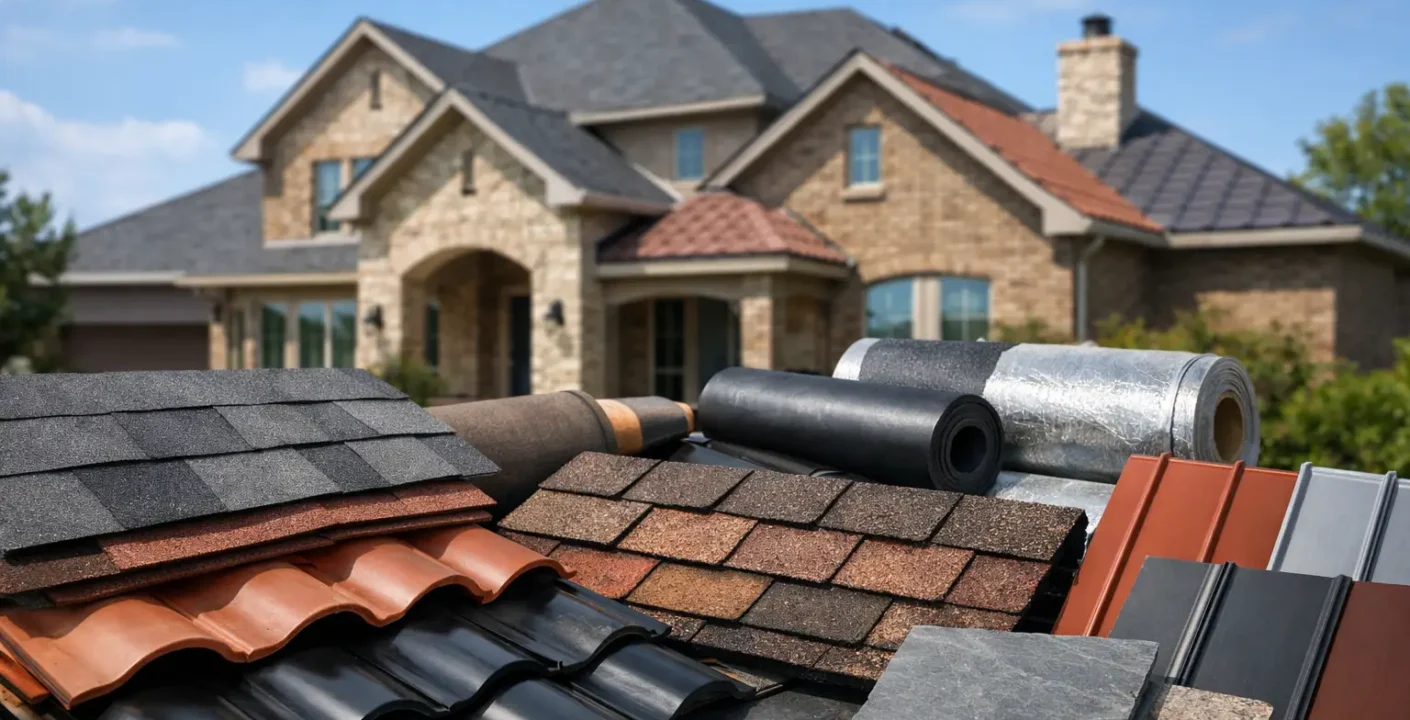
Architectural asphalt shingles are the most common roofing material for North Texas homes, and for good reason. They offer a balanced combination of cost, appearance, availability, and reliable performance. Compared with basic three-tab shingles, architectural shingles are thicker, more dimensional, and generally more durable.
They work well for homeowners who want an attractive roof replacement without the higher upfront investment of metal or tile. Many colors and profiles are available, making it easier to match a brick exterior, painted siding, or a broader exterior renovation.
The trade-off is lifespan. Standard architectural shingles may last roughly 20 to 30 years under favorable conditions, but Texas heat and storm damage can shorten that timeline. Quality varies between product lines, so it is worth comparing wind ratings, warranty terms, and impact resistance rather than choosing based on color alone.
Impact-Resistant Shingles
For homeowners concerned about hail, impact-resistant shingles are often among the best roofing materials Texas properties can use. These shingles are designed to better withstand impacts than conventional asphalt products and are commonly rated Class 3 or Class 4 under recognized impact-testing standards.
A Class 4 shingle may cost more initially, but it can be a practical investment in hail-prone neighborhoods. Depending on the insurance carrier and policy, some homeowners may also qualify for a premium discount. It is wise to confirm any potential discount directly with your insurance provider before making a final material decision.
Impact resistance does not mean damage-proof. Severe hail can still affect any roof, and the condition of flashing, vents, gutters, and other components matters. Still, homeowners planning to stay in their homes for years often find the added protection worthwhile.
Metal Roofing
Metal roofing has become more popular across Texas because it is durable, energy-conscious, and well suited to intense sun exposure. Standing seam metal roofs are especially valued for their clean appearance, concealed fasteners, and long service life. Metal panels can reflect more solar heat than many dark-colored asphalt roofs, which may help reduce attic heat when paired with proper insulation and ventilation.
Metal also performs well in wind and does not absorb water like some other materials. Depending on the product and installation, a metal roof can last 40 to 70 years or longer.
The primary consideration is cost. A metal roof is typically a larger upfront investment than shingles, and installation requires specialized experience. Homeowners should also discuss panel gauge, coating quality, expansion and contraction details, and the condition of the existing roof structure. A lower bid is not a bargain if it leaves out the details that help a metal roof perform as intended.
Clay and Concrete Tile
Tile roofs bring a distinctive appearance and can provide excellent durability. Clay tile has a classic, high-end character, while concrete tile offers a similar profile in a broader range of styles and often at a lower price point. Both can handle heat well and may last for decades when properly installed and maintained.
However, tile is heavy. Before selecting it, a contractor should verify whether the home’s framing can support the added load. Tile can also crack from severe impacts or foot traffic during maintenance. Repairs may be more specialized than asphalt-shingle repairs, and matching older tile can sometimes be difficult.
Tile makes the most sense when its appearance matches the home’s architecture, the structure can support it, and the homeowner is prepared for the higher material and installation costs.
Synthetic Slate and Shake
Synthetic roofing products are designed to create the look of natural slate or cedar shake without the same weight or maintenance demands. High-quality synthetic materials can be durable, resistant to fading, and easier on a home’s structure than natural stone.
This option appeals to homeowners who want a more distinctive roof without committing to the weight of tile or slate. It can be especially effective on custom homes where the roof is a major part of the exterior design.
Not all synthetic products are equal. Product quality, warranty coverage, local installation experience, and compatibility with North Texas weather should all be part of the conversation. Because this category carries a higher price than conventional shingles, reviewing actual samples and completed installations can help set realistic expectations.
How to Choose the Right Material for Your Home
Start with the condition and style of your home rather than the material you see on a neighbor’s roof. A ranch-style home, a newer two-story property, and a custom home with steep rooflines may each benefit from different materials.
Next, consider how long you expect to own the property. If you plan to sell within a few years, a quality architectural or impact-resistant shingle may provide the best balance of appearance and resale value. If this is your long-term home, metal, tile, or premium synthetic products may justify their higher initial cost.
Your insurance history matters, too. Homeowners who have experienced repeated hail claims may place greater value on impact-rated products. Those focused on energy efficiency may lean toward reflective metal or lighter-colored roofing options, while recognizing that attic insulation and ventilation are equally important to comfort.
Finally, set aside budget for the full scope of work. A proper roof replacement may include decking repairs, underlayment, flashing, ventilation improvements, pipe boots, ridge materials, and gutter coordination. Comparing proposals line by line is more useful than comparing a single bottom-line number.
Installation Quality Protects Your Investment
The material is only half of the decision. Proper installation determines whether a roof can resist wind-driven rain, manage heat and moisture, and hold up during storms. Ask how the contractor addresses damaged decking, flashing around chimneys and walls, ventilation, and cleanup.
A dependable contractor should explain the proposed scope clearly, identify potential issues before work begins, and communicate promptly if hidden damage is found after the old roof is removed. This transparency helps homeowners avoid surprises and makes it easier to compare roofing proposals fairly.
At Oak Custom Remodeling, the focus is on practical home improvements that protect the home while supporting its comfort, appearance, and long-term value. Roofing should be approached with that same care, especially when storm season can quickly expose shortcuts.
A new roof is a significant decision, but it does not need to be an uncertain one. Choose a material that fits your home, ask direct questions about installation details, and give lasting value more weight than the lowest initial price.