
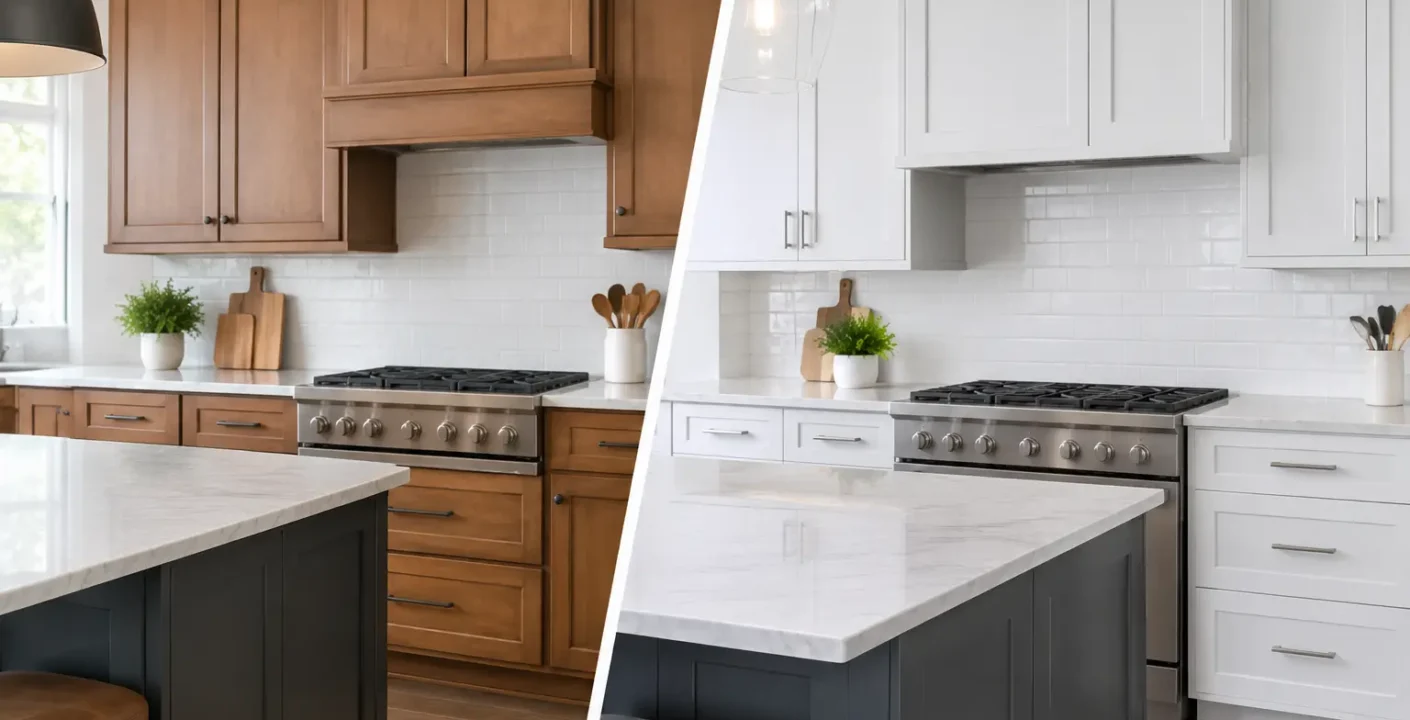
A kitchen can look dated because of worn doors, orange-toned finishes, shallow storage, or a layout that never worked well for your family. When comparing kitchen cabinet refacing versus replacement, the right answer comes down to more than how the cabinets look from across the room. It depends on the condition of the cabinet boxes, the changes you want to make, and how long you expect the renovation to serve your home.
Refacing can give a structurally sound kitchen a dramatic visual update without the cost and disruption of removing every cabinet. Replacement creates far more freedom, but it is a larger investment with more decisions involved. Understanding where each option makes sense can help you plan with confidence rather than choosing based on the lowest initial price.
Kitchen Cabinet Refacing Versus Replacement: The Key Difference
Cabinet refacing keeps the existing cabinet boxes in place. A remodeling team covers the visible cabinet frames with new veneer or laminate and installs new doors, drawer fronts, hardware, and often new moldings. The interior cabinet structure generally remains unchanged, although some upgrades may be possible depending on the existing layout.
Cabinet replacement means removing the existing cabinets and installing new ones. This can include stock, semi-custom, or custom cabinetry. Because the old cabinets are gone, replacement allows you to change the footprint, cabinet sizes, storage configuration, and overall kitchen layout.
The distinction matters because cabinet doors are only one part of a kitchen’s performance. If the boxes are solid and the layout works, refacing may be a practical investment. If drawers stick, cabinets show water damage, or the kitchen lacks the storage and workflow your household needs, new cabinets often provide better long-term value.
When Cabinet Refacing Is a Smart Choice
Refacing is usually best for homeowners who like their current kitchen layout but want a more current appearance. It works particularly well when cabinets are well-built, securely attached, and free of significant moisture damage, warping, or structural deterioration.
A refacing project can change the personality of a kitchen quickly. New shaker-style doors, updated pulls, a painted or wood-grain finish, and fresh countertops can make an older kitchen feel substantially newer. For a home being prepared for sale, this approach can also improve visual appeal without taking on a full-scale kitchen reconstruction.
The timeline is another advantage. Since the cabinet boxes remain in place, refacing usually involves less demolition and less time without a usable kitchen than a full replacement. That can be meaningful for busy families who need to keep daily routines moving.
Refacing may also be a good fit if your renovation scope is focused on surfaces. For example, a homeowner may want new doors, counters, backsplash, lighting, and paint while keeping the sink, range, and refrigerator in their current locations. In that situation, the existing cabinets may provide a stable foundation for the update.
Limits to Understand Before Refacing
Refacing does not fix a poorly planned kitchen. If there is not enough pantry space, the corner cabinets are difficult to use, or the dishwasher door blocks traffic, new doors will not solve those functional problems.
It also provides limited flexibility for changing cabinet dimensions. Small modifications, such as adding certain trim pieces or replacing a narrow cabinet, may be possible. Moving major cabinet runs, creating a larger island, or changing appliance locations generally points toward replacement.
Homeowners should also look closely at the existing cabinet construction. Particleboard boxes that have swollen around the sink, loose face frames, sagging shelves, and drawers that are already failing are warning signs. Applying beautiful new fronts to weak cabinet boxes can leave you with an update that looks better but does not perform better.
When Cabinet Replacement Is Worth the Investment
Replacement is often the better choice when function is the primary concern. New cabinetry can be designed around how your household actually uses the kitchen, from a deeper pantry for bulk groceries to pullout storage for pots, spices, and trash bins.
It is also the stronger option when the kitchen layout needs to change. Removing a peninsula, adding an island, opening a wall, shifting the sink, or making room for wider appliances usually requires a cabinet plan built from the ground up. Those changes can improve traffic flow, increase storage, and make the kitchen more comfortable for cooking and gathering.
Replacement gives you a broader range of materials, construction quality, finishes, and specialized storage. Custom cabinetry can make better use of unusual walls or tight spaces, while semi-custom options often offer a balance between personalization and budget. The right choice depends on your priorities, not simply on whether custom cabinets sound more impressive.
There are situations where replacement is not optional. Cabinets affected by long-term water leaks, mold, pests, extensive delamination, or serious structural damage should be evaluated carefully before any cosmetic work begins. A qualified contractor can identify whether repair is realistic or whether removal is the safer path.
The Trade-Offs of New Cabinets
A full replacement typically costs more because it includes demolition, disposal, new cabinet materials, installation, and potentially electrical, plumbing, drywall, flooring, or countertop work. If you are moving appliances or walls, the scope can grow quickly.
The timeline is usually longer as well. Cabinet ordering, demolition, installation, measurements for countertops, and final finish work need to happen in the right sequence. Good planning helps prevent surprises, but homeowners should expect a more involved project and prepare for a period of limited kitchen access.
That investment can be worthwhile when it resolves problems you live with every day. A kitchen that is easier to navigate, easier to organize, and built with durable materials can add meaningful enjoyment now while supporting long-term resale appeal.
Compare Costs by Looking Beyond the First Quote
Refacing is commonly less expensive than replacement, but the exact difference depends on the size of the kitchen, door style, finish selection, hardware, and the condition of the existing cabinets. A refacing estimate can rise when homeowners choose premium door materials, extensive trim, new countertops, backsplash work, or modifications to cabinet openings.
Replacement has a wider cost range because cabinet options vary significantly. Stock cabinets may keep costs controlled, while semi-custom and custom cabinetry add flexibility, stronger construction options, and more design choices. Labor and related updates also matter. Once cabinets come out, homeowners may decide to address aging flooring, outdated electrical outlets, wall damage, or plumbing connections that were previously hidden.
The most useful comparison is not refacing cost versus cabinet cost alone. Compare complete project scopes. Ask what is included for demolition, installation, countertop coordination, trim, hardware, painting, disposal, and protection of nearby areas. A clear scope helps prevent an inexpensive quote from becoming a frustrating series of additions later.
Start With an Honest Cabinet Assessment
Before selecting door colors or countertop samples, assess what is behind the cabinet fronts. Check under the sink for swelling or staining. Open drawers fully and note whether they glide smoothly. Look for shelves that sag under normal weight, doors that will not stay aligned, and cabinet boxes that have separated from the wall or floor.
Then consider how the kitchen functions during a normal week. Can two people work comfortably? Is there enough prep space near the range? Where do small appliances, recycling, and pantry items go? Does the island help the room, or does it create a bottleneck? These answers reveal whether your project is mainly cosmetic or whether it needs a deeper redesign.
It also helps to consider your plans for the home. If you expect to stay for many years, investing in a layout that fits your lifestyle may be more valuable than a quick visual update. If you are preparing to sell soon, a well-executed reface may be the sensible option when the existing kitchen is functional and structurally sound.
Make the Choice That Solves the Real Problem
Refacing is not a lesser version of replacement when the cabinet boxes are durable and the layout already serves you well. It can be an efficient, attractive way to bring an older kitchen forward. Replacement is not automatically the better choice either, but it is often the right one when poor storage, damaged materials, or an outdated layout keep the kitchen from working as it should.
For homeowners in Sachse and the greater Dallas-Fort Worth area, an in-home evaluation can turn a difficult decision into a clear plan. Oak Custom Remodeling can help assess the condition of your existing cabinets, define the project scope, and recommend an approach that supports your home, budget, and daily routine. The best kitchen update is the one that still feels practical and well-built long after the new cabinet doors stop being new.