
A kitchen can look beautifully planned on paper and still fall short once cabinets are installed. The usual trouble spots are an awkward corner, a refrigerator wall that is not truly square, or storage that does not match how your family cooks. When weighing semi custom versus custom cabinets, the right choice is less about buying the most expensive option and more about investing in the level of fit, flexibility, and finish your home actually needs.
For homeowners in Sachse and across the Dallas-Fort Worth area, cabinetry is often one of the largest decisions in a kitchen, bathroom, laundry room, or built-in storage project. It affects the room’s appearance, daily function, renovation timeline, and long-term value. Understanding where semi-custom and custom cabinets differ makes it much easier to plan a project with confidence.
What Semi-Custom Cabinets Offer
Semi-custom cabinets begin with a manufacturer’s established cabinet line. You select from a defined range of box sizes, door styles, finishes, wood species, hardware options, and storage accessories. Unlike stock cabinets, semi-custom lines often allow limited adjustments to cabinet width, depth, or height, depending on the manufacturer.
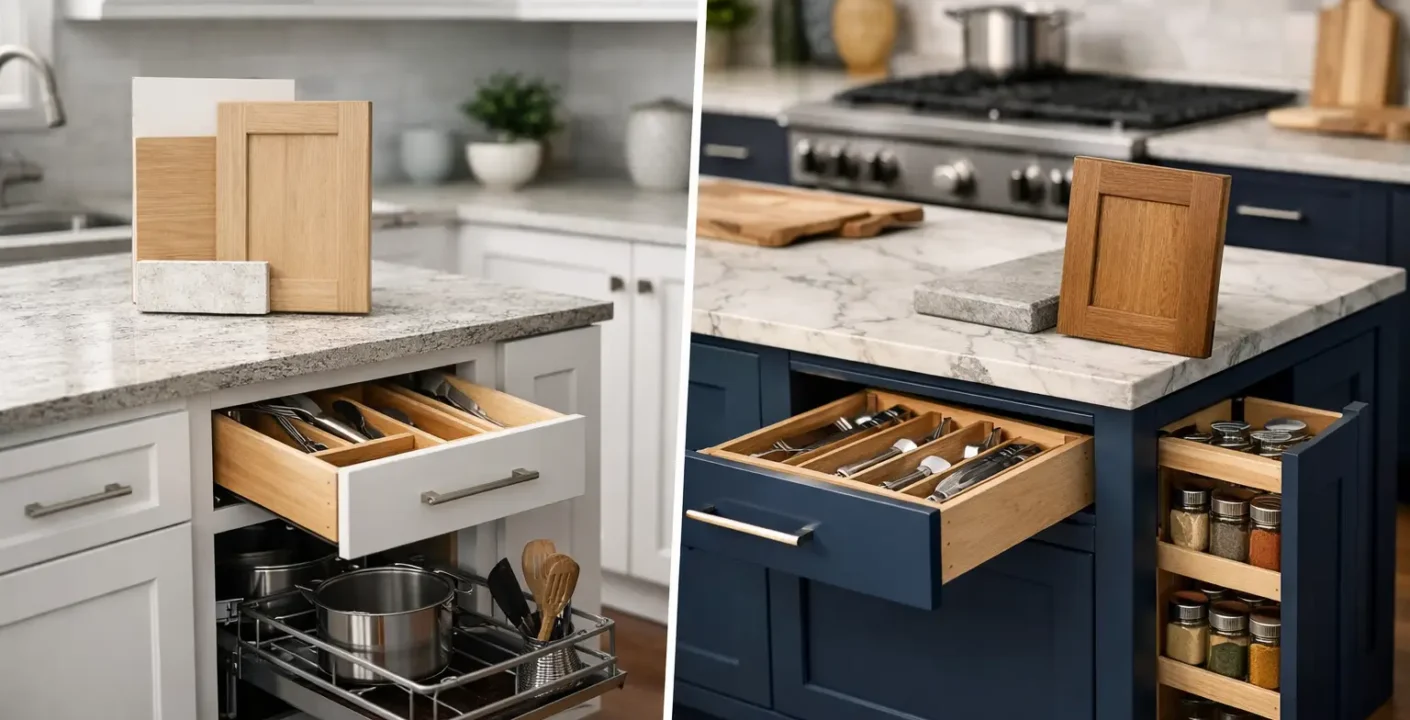
This gives homeowners more design control without starting every cabinet from a blank page. You may be able to choose taller upper cabinets, add pullout trays, specify a painted finish, or select a door profile that better fits the rest of your home. Many semi-custom products also offer upgraded construction compared with entry-level stock cabinetry.
The main advantage is predictability. Because the cabinet maker is working within an existing product system, material options, pricing, and production processes are generally more defined. For a straightforward kitchen layout with standard appliance sizes, semi-custom cabinetry can provide a polished, durable result at a more manageable price point than fully custom work.
There are limits, however. A semi-custom line may not offer the exact cabinet depth needed for a tight hallway, an unusual ceiling height, or a challenging corner. It may also have restrictions on finishes, interior configurations, and the way cabinets can be modified in the field. Those limits matter more in older homes, homes with uneven walls, and rooms where every inch of storage counts.
Semi Custom Versus Custom Cabinets: The Main Difference
Custom cabinets are designed and built for the specific room rather than selected from a pre-established catalog of sizes. The cabinetmaker can build boxes to precise dimensions, create specialized storage, match an existing architectural feature, or develop a finish that supports the home’s overall design.
That level of control is valuable when the room has a complicated layout. A kitchen with an angled wall, low window, exposed beam, oversized range, or limited clearance around an island may benefit from custom cabinetry. The same is true for a bathroom vanity that must fit between two walls exactly, a laundry room that needs practical storage around appliances, or a living area that calls for built-ins designed around a fireplace.
Custom work also gives you more options in materials and construction details. You can make more specific decisions about wood species, door profiles, drawer design, finish color, interior organization, and decorative elements. If a homeowner wants a painted cabinet color developed for one room, a particular grain pattern, or cabinetry that aligns precisely with existing millwork, custom is often the more direct path.
The trade-off is that greater freedom requires greater planning. Custom cabinets typically cost more, take longer to produce, and demand careful decisions early in the remodeling process. A dependable contractor and experienced cabinet professional are especially important because measurements, appliance specifications, electrical locations, plumbing, and design details all need to work together before fabrication begins.
Cost: Look Beyond the Cabinet Price
Custom cabinets generally carry a higher upfront price because they involve individual design, fabrication, materials, finishing, and labor. Semi-custom cabinets can reduce costs by using standardized components and repeatable production methods. But the difference is not always as wide as homeowners expect.
A semi-custom cabinet line with premium finishes, specialized inserts, decorative panels, and extensive modifications can approach the price of simpler custom cabinetry. On the other hand, a custom design that eliminates filler panels, uses the room more efficiently, and avoids awkward dead space may provide stronger value over time.
It also helps to evaluate the full renovation scope. Cabinets are connected to countertops, backsplash, flooring, lighting, appliance placement, and labor. Choosing a lower cabinet price does not always lower the total project cost if significant alterations are needed to make standard sizes work. Likewise, selecting custom cabinets does not mean every cabinet must include a high-end accessory or elaborate detail.
The best budget conversation starts with priorities. Decide where precision matters most, where you want upgraded storage, and which features are primarily decorative. A well-planned mix can be practical. For example, a homeowner may choose semi-custom perimeter cabinets while investing in a custom island, vanity, or built-in feature that needs a more tailored fit.
Fit and Storage Can Matter More Than Style
Door style and color usually get attention first, but fit is where cabinetry earns its value every day. Cabinet depth affects walkways. Drawer placement affects how easily a kitchen functions when more than one person is cooking. A poorly planned corner can leave valuable space hard to reach, while a well-designed one can hold small appliances, cookware, or pantry items neatly.
Semi-custom cabinets work well when the room can accommodate standard increments with modest adjustments. Many newer or previously remodeled North Texas homes have layouts that make this possible. Careful measuring and thoughtful design can create a finished appearance without requiring every box to be built individually.
Custom cabinets are often worth considering when standard sizes would create wide fillers, uneven gaps, shallow storage, or an island that feels undersized for the room. They are particularly helpful in compact kitchens and bathrooms, where a few inches can make a meaningful difference. Custom work can also solve functional needs that catalogs do not address, such as a charging drawer, a dedicated pet-feeding station, storage for oversized serving pieces, or cabinetry built around accessibility requirements.
Timeline and Decision-Making
Semi-custom cabinets frequently have a shorter production timeline than fully custom cabinetry, though lead times vary by manufacturer, finish, and market conditions. They can be a sensible choice when a homeowner has a clear plan, a relatively standard layout, and a renovation schedule that needs more certainty.
Custom cabinets often require additional time for design approval, shop drawings, fabrication, finishing, and installation. That time is not wasted when the result solves meaningful layout or storage challenges, but it should be acknowledged early. Ordering cabinets before finalizing appliance dimensions or confirming wall changes is a common and expensive mistake.
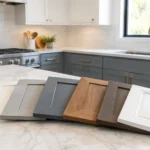
Whether you choose semi-custom or custom, avoid making a cabinet decision based on door samples alone. Review the full layout, appliance specifications, cabinet elevations, storage plan, and finish selections. Ask how fillers, panels, trim, and crown molding will be handled. These details shape the finished room as much as the cabinet door itself.
How to Choose the Right Cabinet Option
Semi-custom cabinetry is usually a strong fit when you want upgraded choices, dependable quality, and a refined look within a controlled budget. It is especially effective for kitchens and bathrooms with conventional dimensions and homeowners who can find a cabinet line that meets most of their design goals.
Custom cabinetry is a better fit when the room is unusual, storage needs are highly specific, or the design calls for precise proportions and distinctive details. It can also be the right investment when cabinetry is a central feature of a larger renovation and you intend to stay in the home for many years.
There is no universal winner. A high-quality semi-custom kitchen can look and perform exceptionally well. A custom cabinet package can be the better financial decision when it prevents compromise in a challenging space. The key is matching the product to the room, the budget, and the way your household lives.
For a remodeling project, cabinetry should be evaluated as part of the whole plan rather than as an isolated purchase. Oak Custom Remodeling helps homeowners weigh layout, materials, function, and installation requirements before choices become costly changes. A thoughtful cabinet plan gives you a room that feels intentional from the first day you use it and continues to support your home’s value for years to come.